
Hardware Review
9 min readThe Reality of Using the Lenovo Legion 5 for Six Months
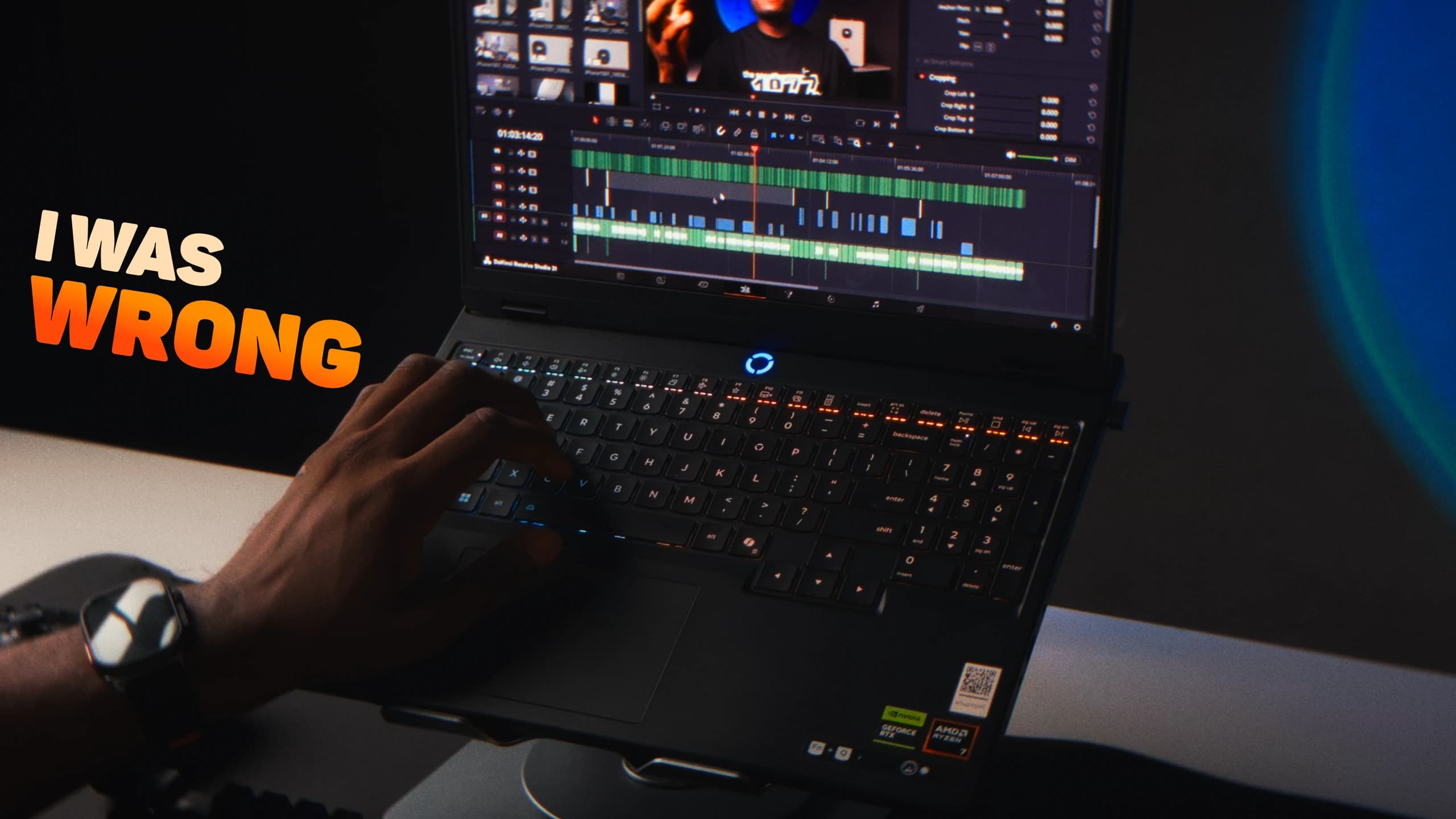
After six months with the Lenovo Legion 5, here is what I still love, what now annoys me, what I would change, and whether I would buy it again.

Tech Creator /
Six Months Later
Six months ago, I spent my money on the Lenovo Legion 5. The reason I bought a gaming laptop instead of something like a MacBook was pretty simple. I needed one computer that could basically do everything I do. I code, edit videos, occasionally work in Blender, game, stream and sometimes try to do several of those things at the same time.
On paper, the Legion made much more sense for me. My configuration came with a Ryzen 7 processor, an RTX 5060 Laptop GPU, 16GB of RAM and enough upgradeability that I would not immediately be stuck with whatever configuration I bought on day one.
After six months, I still think I made the right decision. There are definitely things that annoy me now that I would never have noticed during a normal review period, but the laptop still fits the kind of work and entertainment I bought it for.
A good example happened recently when I opened God of War and ended up troubleshooting why the system appeared to be involving the integrated Radeon graphics when I wanted the RTX 5060 doing the work. That experience probably sums up ownership better than anything else. The hardware is excellent, but the software can be occasionally irritating.
So this is less of another review and more about what actually changes after living with the laptop for six months. What has aged well, what now annoys me, what I would configure differently and whether I would actually buy another one.
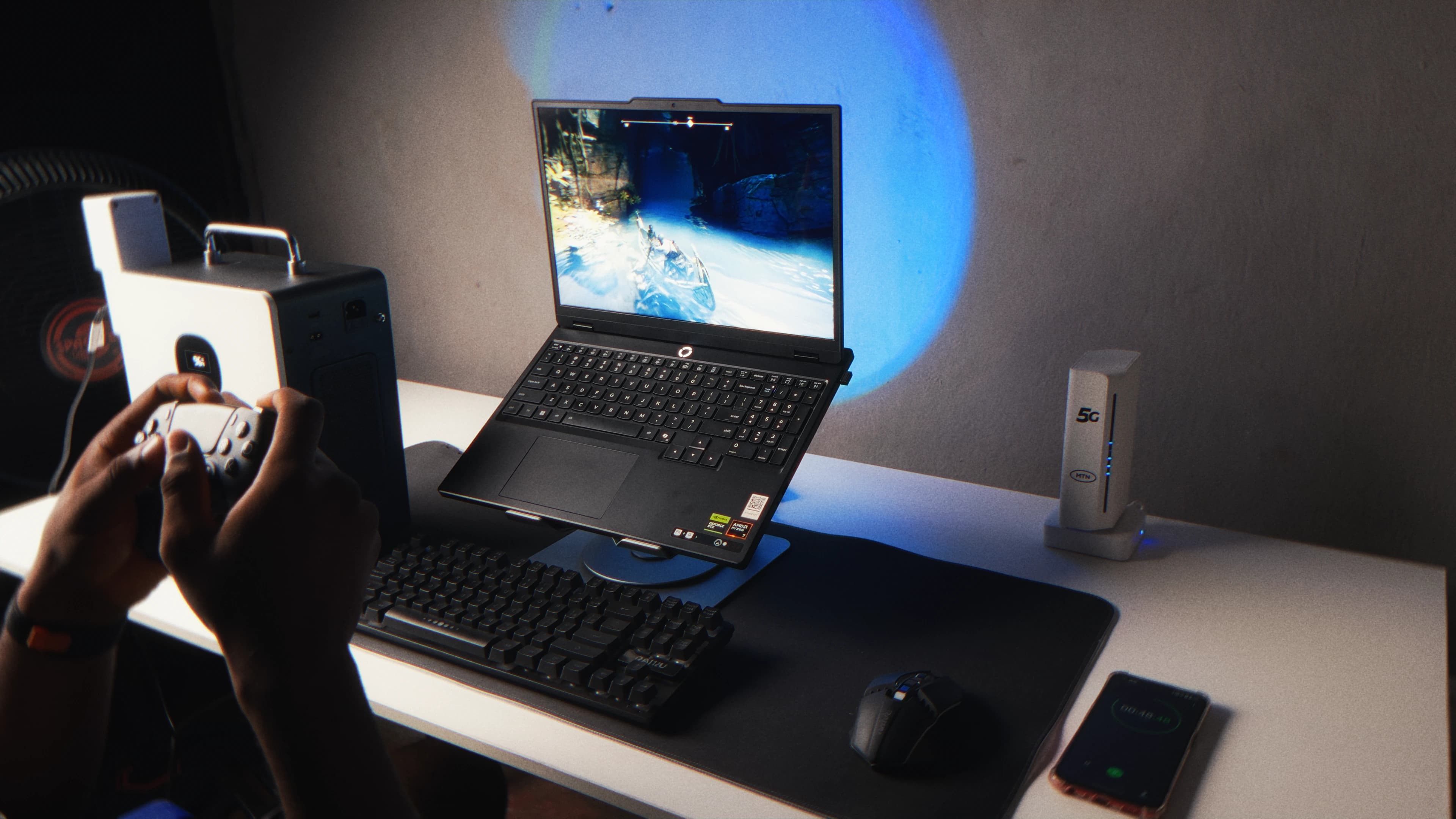 Lenovo Legion 5 on my desk after six months of daily use
Why I Bought the Legion 5
When I bought this laptop, I was stuck between two very different kinds of machines. Something like a MacBook makes a lot of sense for the work side of my life. You get excellent battery life, strong editing performance, quiet operation and a much more portable machine.
The problem is that my workload does not stop there. I also use Blender, play games, stream, run Windows specific software and regularly experiment with random tools or projects that would make a more restricted setup annoying.
That is where the Legion won for me. I was not looking for the laptop that was absolutely perfect at one specific thing. I wanted the laptop with the fewest things it simply could not do.
Six months later, that still feels like the right way to describe why I like it. This has basically become my entire computer.
Performance Is Still the Best Part
The thing that has aged best is probably the least surprising answer: performance.
My configuration uses AMD's Ryzen 7 260 and an RTX 5060 Laptop GPU. The CPU has 8 cores and 16 threads, while the RTX 5060 comes with 8GB of VRAM and can run at up to 115W in this machine.
Those numbers sounded impressive when I bought it, but after six months I care much more about what happens when I actually sit down to work. A normal session for me can mean DaVinci Resolve, a browser with far too many tabs, Photoshop, VS Code, File Explorer and whatever else I forgot to close.
Most of the time, I do not think about whether the processor is fast enough or whether the GPU can handle what I am doing. That is probably the best compliment I can give the laptop. It usually gets out of the way and lets me work.
 Lenovo Legion 5 running DaVinci Resolve, VS Code and browser windows
The Display Has Grown on Me
The display is something I appreciate more now than when I bought the laptop. A good screen tends to disappear into the background once you get used to it. It just becomes the screen you use every day.
I only really notice how much I like the Legion's display when I move back to something worse. That matters for me because this laptop lives two very different lives. One minute I can be colour grading footage, and the next I can be playing a game.
Those two jobs usually ask for different things from a display, but the Legion handles both well enough that I have not felt an urgent need to buy a separate monitor again.
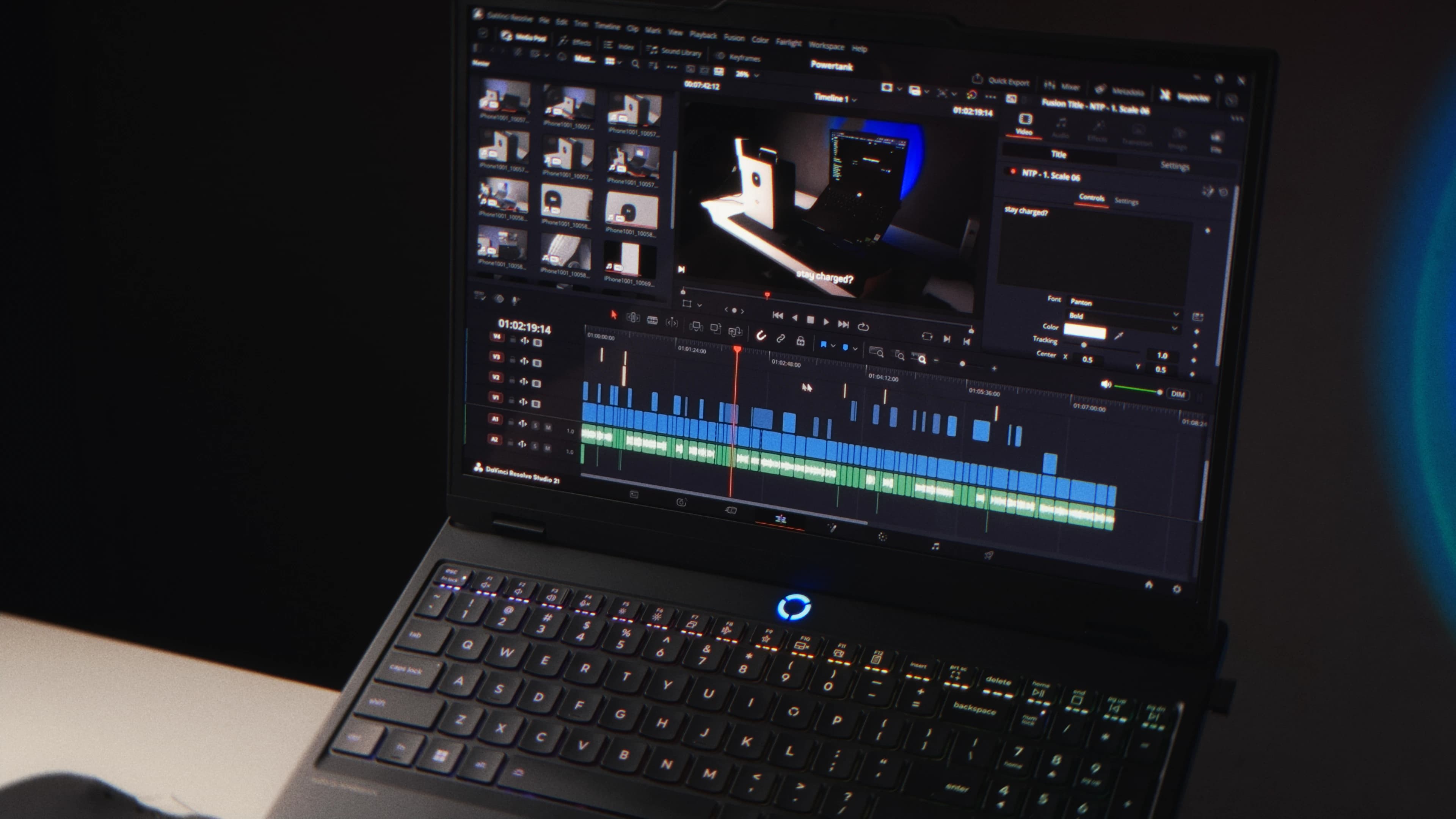 Lenovo Legion 5 display showing a video editing timeline
The One Specification I Would Change
This is where my opinion has changed the most.
When buying a laptop, it is easy to think about workloads individually. Can it edit video? Yes. Can it run Blender? Yes. Can it game? Obviously.
That is not actually how I use computers, though. I will have a project open, export something, switch to the browser, remember I need to change something in Photoshop, leave all of that open and then launch something else.
That is where the one specification I would change becomes obvious: 16GB of RAM.
Sixteen gigabytes is not unusable. It is still workable for gaming, development and normal editing. The problem is that I am rarely doing only one of those things at a time.
If I were configuring this laptop again, I would either buy it with 32GB of RAM from the beginning or make the RAM upgrade one of the first things I did.
Thankfully, this is one of the reasons I wanted this type of laptop in the first place. The Legion gives me two DDR5 RAM slots instead of permanently soldering everything to the board.
Upgradeability was something I cared about before buying it. Six months later, I appreciate it even more.
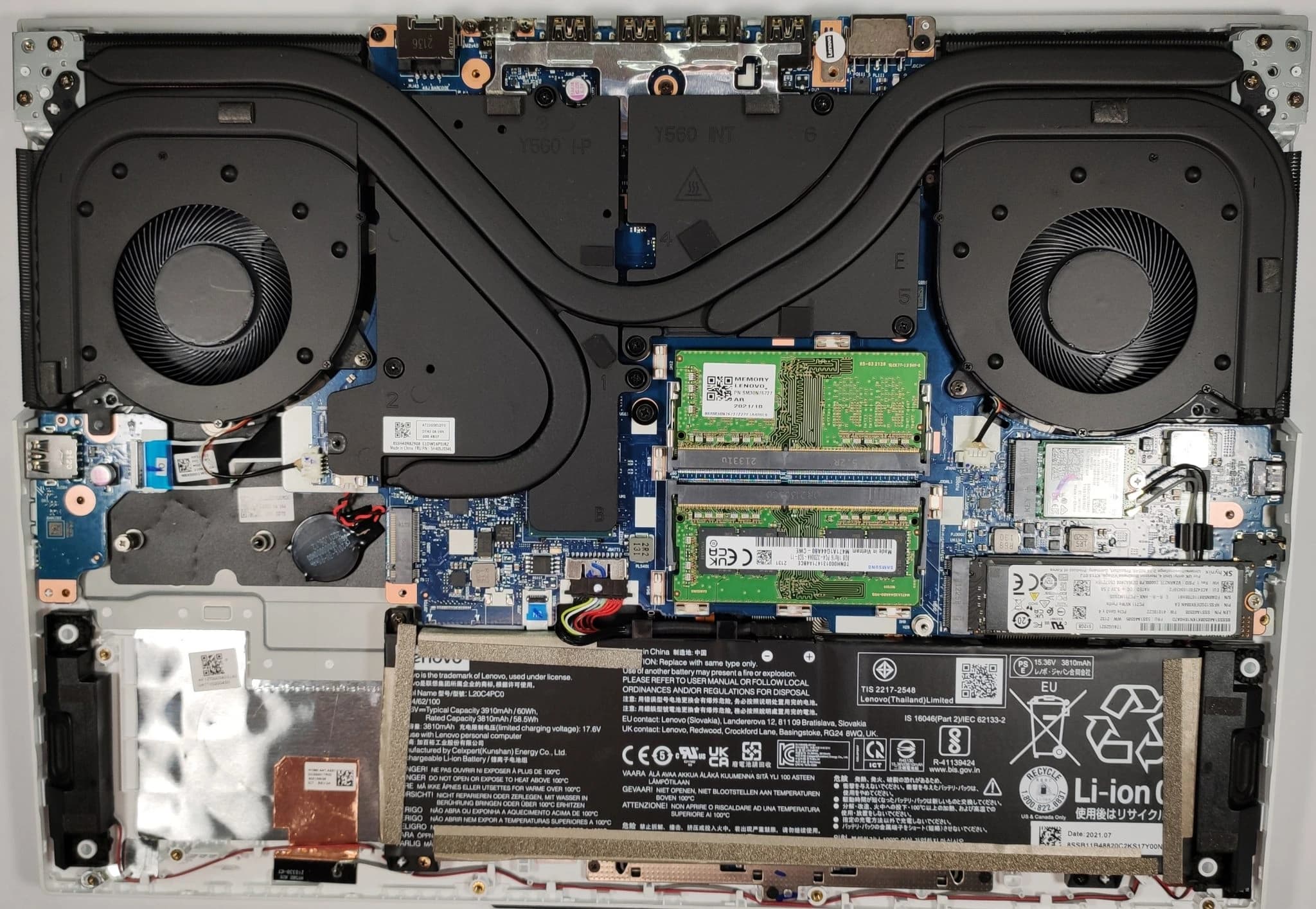 Inside the Lenovo Legion 5 showing its upgradeable RAM area
Gaming Has Been Good, but the Software Can Be Annoying
Gaming was obviously one of the main reasons for buying something with an RTX graphics card, and after six months I do not feel like I chose the wrong GPU.
For the games I actually play, the RTX 5060 gives me the combination I care about. I can get good image quality, high frame rates and use features like DLSS when I need them.
The bigger lesson has been that raw GPU performance is only half of the gaming laptop experience. The other half is dealing with how the system decides to use that hardware.
The Legion gives you several ways to control which GPU the laptop is using. You can prioritise battery life, use hybrid modes or force the dedicated NVIDIA GPU when you want maximum performance. Most of the time, it works exactly as expected.
Then occasionally Windows, NVIDIA, AMD and whatever game you are launching seem to collectively lose their minds.
My recent example was God of War. I had the machine configured for the discrete GPU, yet I was still seeing behaviour that suggested the Radeon integrated graphics was involved where I did not want it.
This is not something I am saying every Legion owner will experience. It is simply something I have personally had to troubleshoot, and it highlights something you do not really learn from using a gaming laptop for two days.
Gaming laptops have become incredibly powerful, but they have not become consoles. You still occasionally need to understand drivers, GPU modes, performance profiles and why something changed after an update.
That flexibility is partly why I bought the laptop. It is also part of the price you pay for having that flexibility.
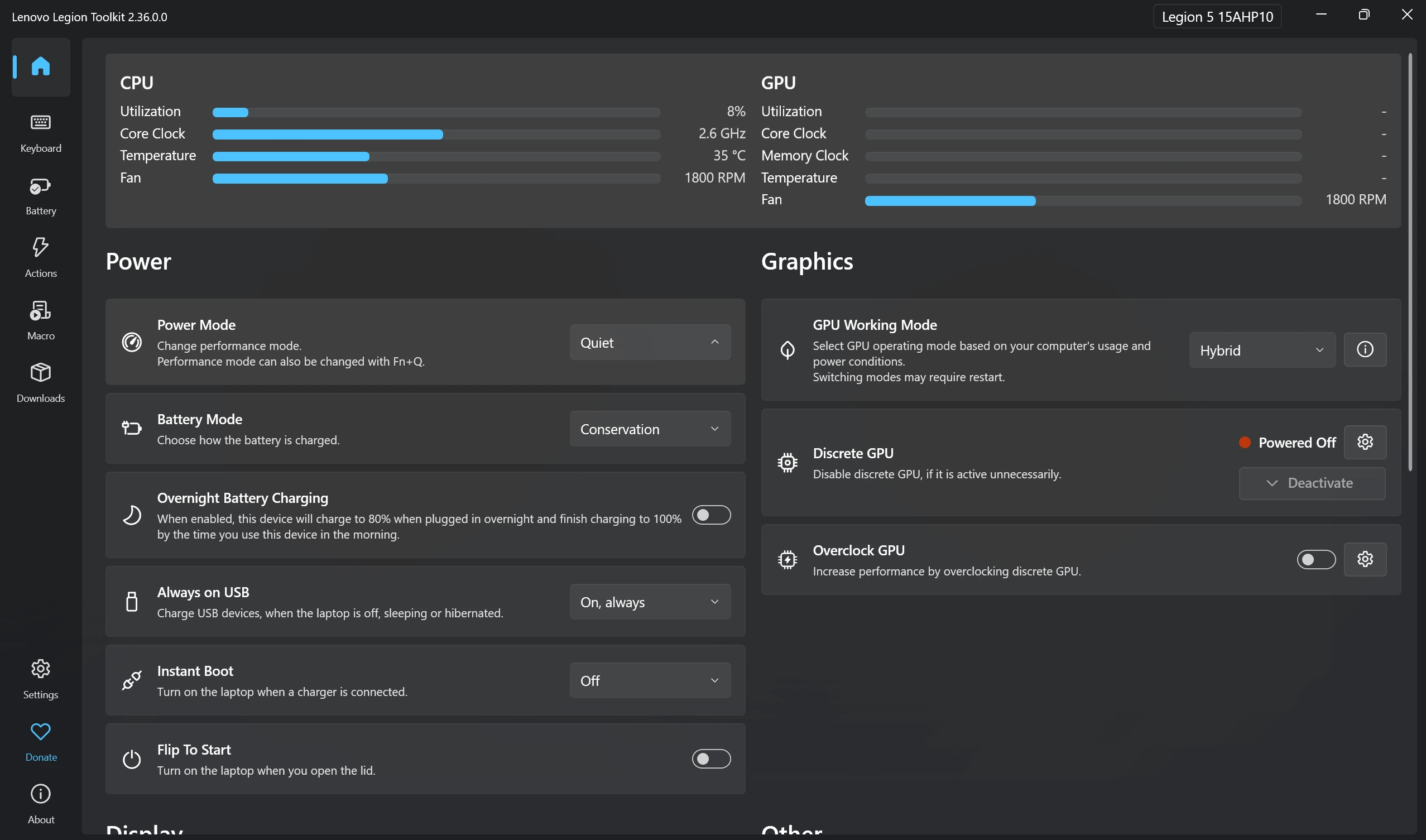 Lenovo ToolKit showing GPU and performance settings
Noise, Performance Modes and Battery Life
The fans can get loud under load, which is not particularly surprising for a gaming laptop. What has changed is how I use the performance modes.
I no longer automatically run everything at maximum performance. If I am browsing or coding, I normally keep the laptop in Quiet Mode. If I am gaming, rendering or doing something that genuinely benefits from the extra performance, then I switch modes and let the fans do their thing.
That sounds obvious, but it is something ownership taught me. Maximum performance is not automatically the best mode for every task.
Battery life is another area where my opinion has not really changed. The Legion 5 has an 80Wh battery, but it is also powering a high performance processor, a dedicated GPU and a high refresh display. This was never the laptop I bought because I wanted to spend an entire day pretending chargers did not exist.
I enjoy carrying it around, but the laptop and its charger remind you very quickly that this is much closer to a portable workstation than an ultraportable.
If I travelled constantly, that might genuinely have changed my buying decision. Mine spends most of its life moving between places where I can plug in, so I accept the tradeoff.
 Lenovo Legion 5 beside its charger and power brick
How Has It Physically Held Up?
After six months, I also wanted to look at something specification sheets cannot tell you: whether anything has actually started falling apart.
So far, nothing dramatic has happened. I have not had hinge problems, unreliable ports, dead pixels or any major physical issue that makes the laptop feel significantly worse than when I bought it.
Six months obviously is not enough to make some grand statement about long term durability, but at least so far I do not have a hidden hardware horror story to report.
 Close up of the Lenovo Legion 5 keyboard, hinge and ports after six months
What I Would Do Differently
If I were buying the laptop again today, there are a few things I would change.
The first is RAM. I would move to 32GB much sooner. Not because 16GB suddenly became useless, but because my workload is heavy enough to justify it.
I would also pay more attention to portability if I knew I was going to travel constantly. The Legion absolutely can be moved around, but nobody is confusing it with a MacBook Air.
What I would not change is the GPU. The RTX 5060 was the right call for me, and I have not spent the last six months wishing I had bought something completely different.
I would also go into the purchase knowing that buying a Windows gaming laptop means occasionally troubleshooting a Windows gaming laptop. Drivers, GPU switching, performance modes and random software weirdness are part of the package.
Would I Buy It Again?
Yes.
But probably not for exactly the same reason I originally bought it.
When I first bought the Legion, I was mostly thinking about performance. Ryzen 7, RTX 5060, gaming, Blender, editing and all the obvious things you look at on a specification sheet.
The performance is still good, but the thing I appreciate most now is simply how rarely this computer tells me that I cannot do something.
I can code on it, edit video, work in Blender, game, stream, upgrade the RAM, add another SSD or install some strange project from GitHub without really worrying about whether the laptop fits that use case.
That freedom is the reason the compromises still make sense to me.
There are laptops with better battery life. There are thinner laptops, quieter laptops and computers that require far less troubleshooting.
But there are not many machines that fit my particular combination of work and entertainment better than this one.
And that is probably the biggest thing six months of ownership changed about my opinion.