
Hardware Review
8 min readitel PowerTank 1000Wh Review: Can It Actually Get You Through a Blackout?
I tested the itel PowerTank with my laptop and fan during a blackout to see whether its 1,000Wh battery and 500W output are actually useful for everyday work.

Tech Creator /
The Problem It Is Trying to Solve
There are few things more annoying than the moment power suddenly disappears. The fan stops, everything you were charging stops, and if you're working from a laptop, the remaining battery percentage immediately starts feeling like a countdown timer.
That is the problem the itel PowerTank is supposed to solve.
And instead of spending this review reading everything written on the box, I wanted to answer one question: can this thing realistically keep someone like me working through a power outage?
So I plugged in the setup I would actually care about during a blackout, my laptop and fan, and left both running for an hour. We started at a 100%, and we'll come back to that number later.
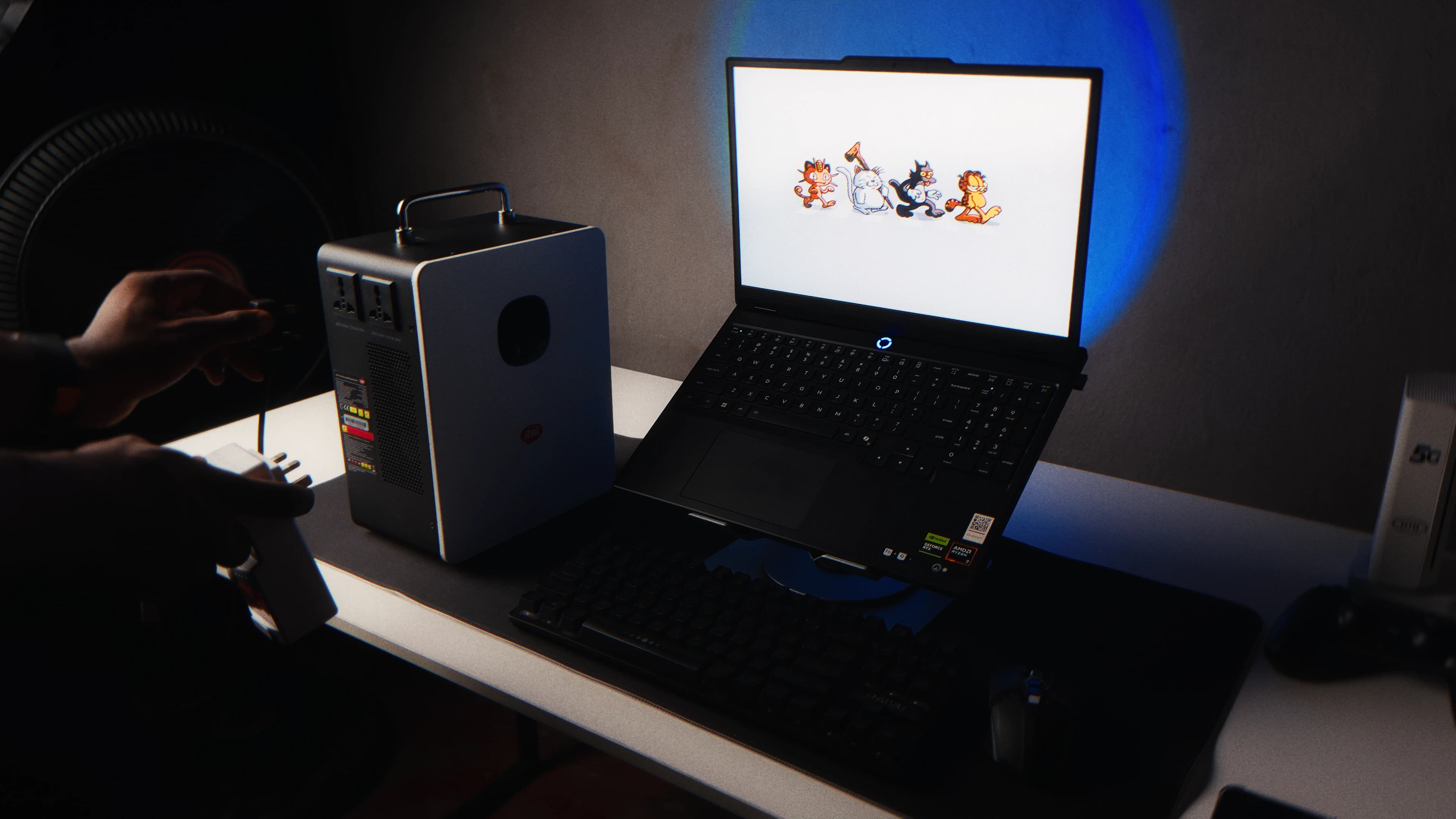 itel PowerTank beside a laptop and fan in a normal work setup
1,000Wh and 500W Are Not the Same Thing
Before getting into the test, there are two numbers you need to understand. The PowerTank has a 1,000Wh battery and a 500W AC output, and those numbers describe completely different things.
The 1,000Wh figure is basically the size of the fuel tank, while the 500W figure tells you how much power the unit can deliver at once. So you can have a lot of energy stored inside the battery, but if you connect something that demands more power than the inverter can provide, you've still got a problem.
The easiest way to remember it: battery capacity tells you how long. Output tells you what you can power.
That distinction matters because I don't want somebody looking at a big 1,000Wh battery and assuming they can run their entire house from it.
This is much more suited to laptops, routers, fans, televisions, lights and other relatively modest loads. It isn't trying to replace a massive generator. It is trying to cover that gap between "NEPA just took light" and "I still need to work."
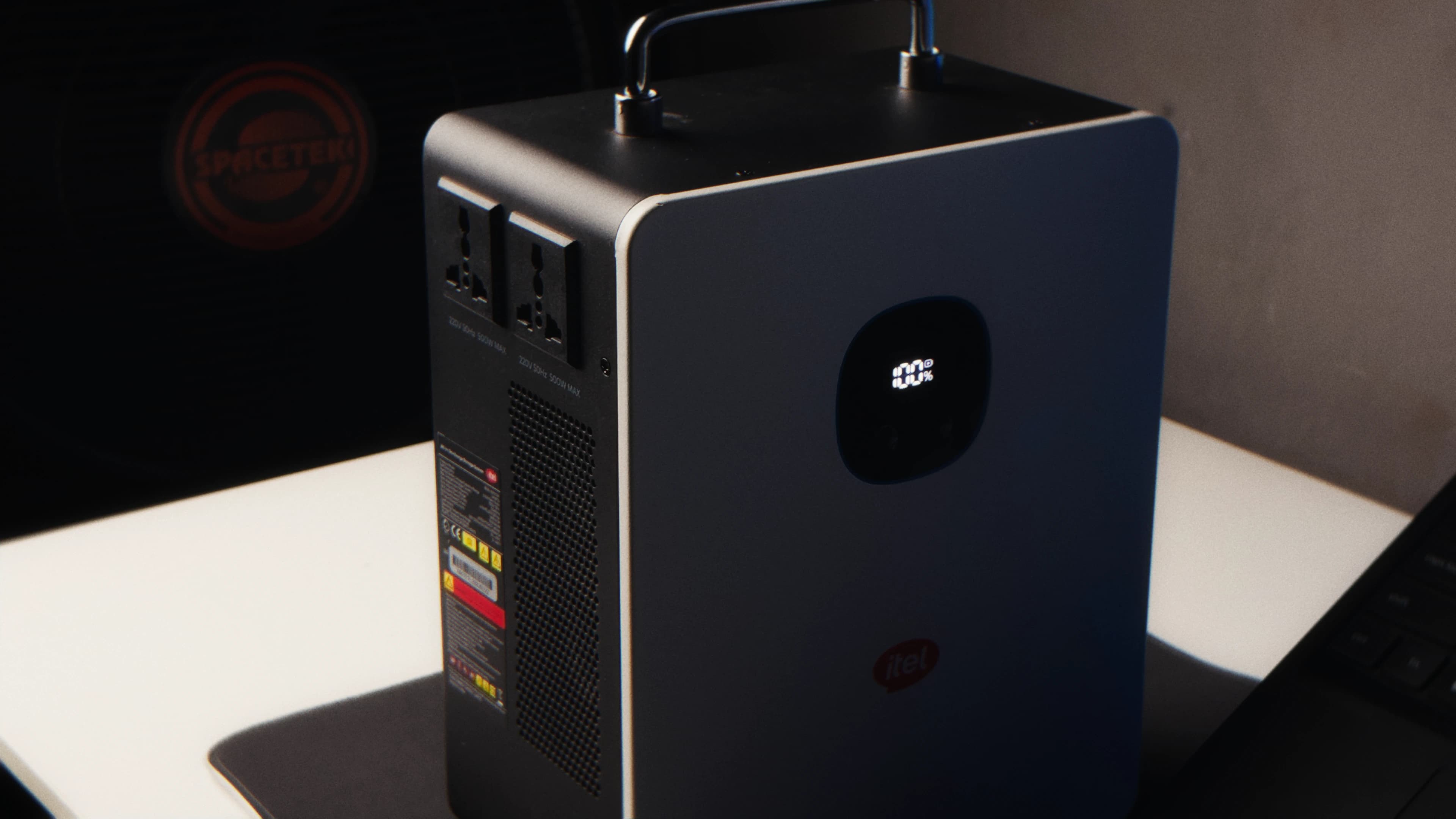 Close-up of the itel PowerTank showing its AC sockets, charging ports and display
Setup Is Almost Too Simple
One thing I immediately appreciate is that there is basically no complicated installation. Put it where you want it, charge it, connect your devices and you're running.
Using it feels much closer to using a giant power bank than setting up a traditional backup power system. The difference is that you can plug actual appliances into this one.
The display gives you the battery level and basic status information, but this is also where I found my first complaint: I wish it gave me a clearer live power consumption reading.
When I'm using something like this, one of the first things I want to know is how much power my devices are pulling right now. That makes it much easier to decide whether my laptop and fan are fine, whether I can add a TV, or whether charging another laptop would push things too far.
A live wattage reading would make that immediately obvious. On something whose entire job is managing electricity, I would really like more information about what the electricity is actually doing.
The Real Test: Laptop + Fan
Now for the part I actually cared about.
I connected my laptop and fan, confirmed that the PowerTank was at 100%, and started the timer.
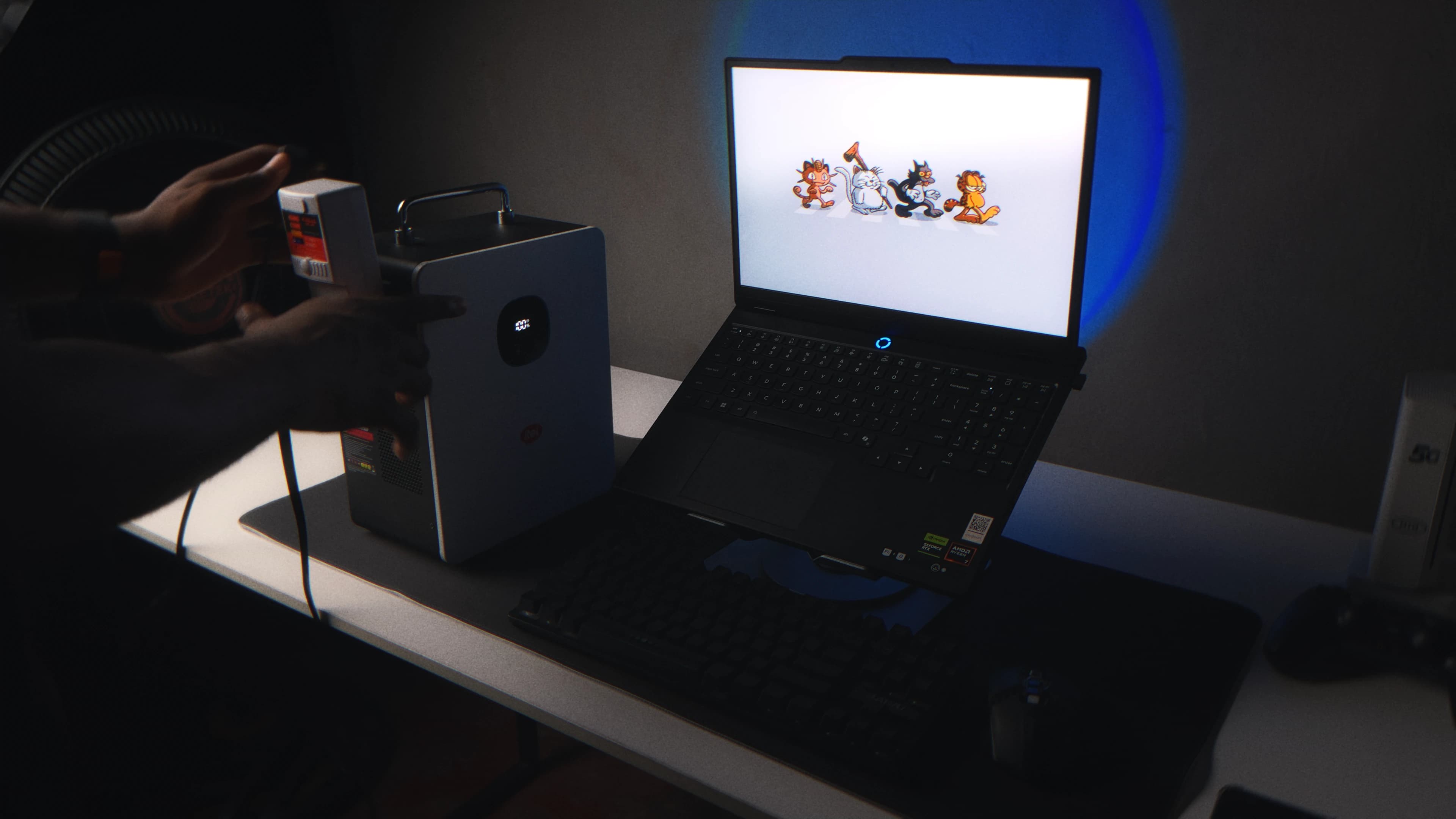 Laptop and fan connected to the itel PowerTank at 100 percent battery
I deliberately wasn't trying to create some ridiculous torture test because that isn't how I would actually use this thing. If I bought one, I care about three things: can my laptop stay charged, can my fan stay on, and can I keep working?
Product reviews sometimes get too obsessed with chasing the biggest possible number. Maximum load, maximum speed, maximum everything. But sometimes the more useful test is much simpler:
Can it survive a normal Tuesday?
30 Minutes In
Half an hour later, everything was still running normally, and this is where a specification like "1,000Wh" starts becoming much easier to understand.
This wasn't a tiny power bank keeping my phone alive. I was sitting at my desk with my laptop plugged in and my fan running, working exactly as I normally would. There was no generator noise, no fuel and no interruption because the power suddenly disappeared.
It just kept going.
And that might be this product's biggest selling point. It's boring, but in a good way. You don't really want your backup power system to be exciting. You want to forget that you're even using it.
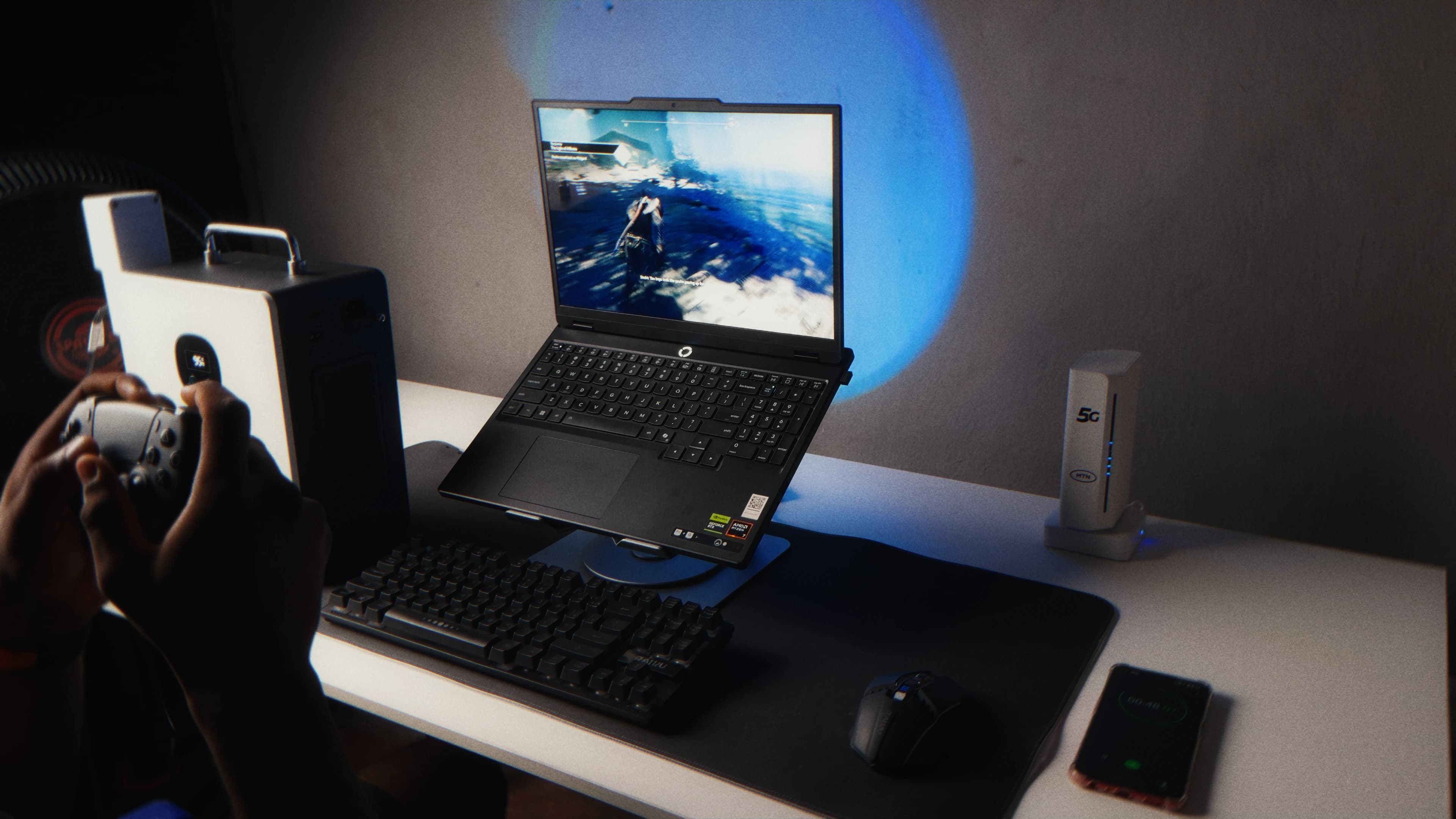 Working normally from a laptop while the fan remains powered by the PowerTank
After One Hour: 91%
After one full hour, I checked the display again.
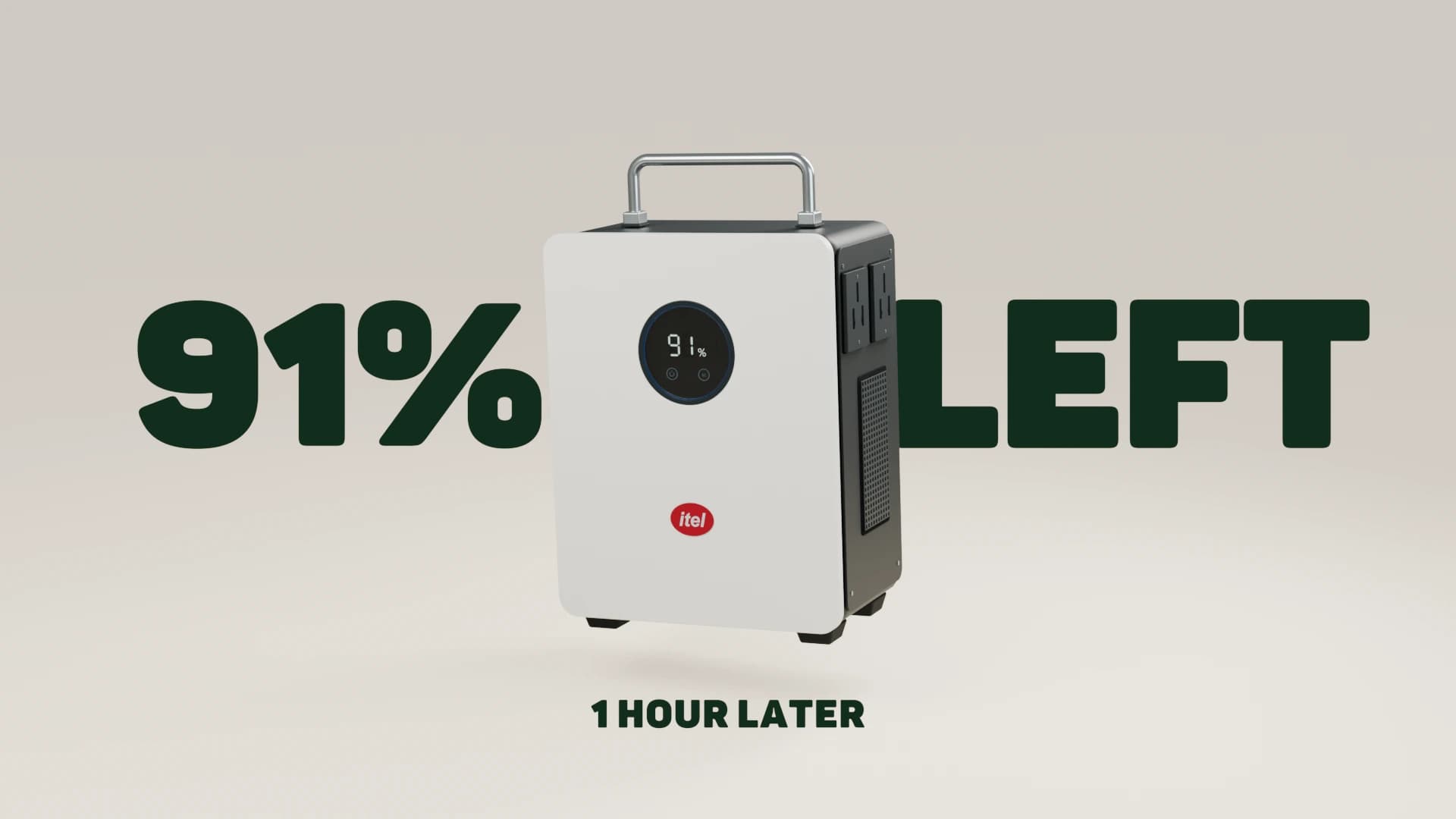
91%.
So my laptop and fan had used 9% of the indicated battery.
My result: laptop + fan running for one hour took the PowerTank from 100% to 91%.
That tells me far more than simply reading "1,000Wh" from a product page. For my particular setup, this isn't emergency power for twenty minutes. It could potentially keep me working through a significant stretch of a blackout.
I wouldn't blindly multiply that 9% by eleven and promise an exact runtime, though. Battery indicators aren't always perfectly linear, and my laptop's power consumption changes depending on what I'm doing. Gaming or rendering would obviously pull more power than writing or browsing, and different fans, laptops and chargers will behave differently.
But now I have something much more useful than a manufacturer's estimate. I know what happened with my devices, in my room, while doing my work.
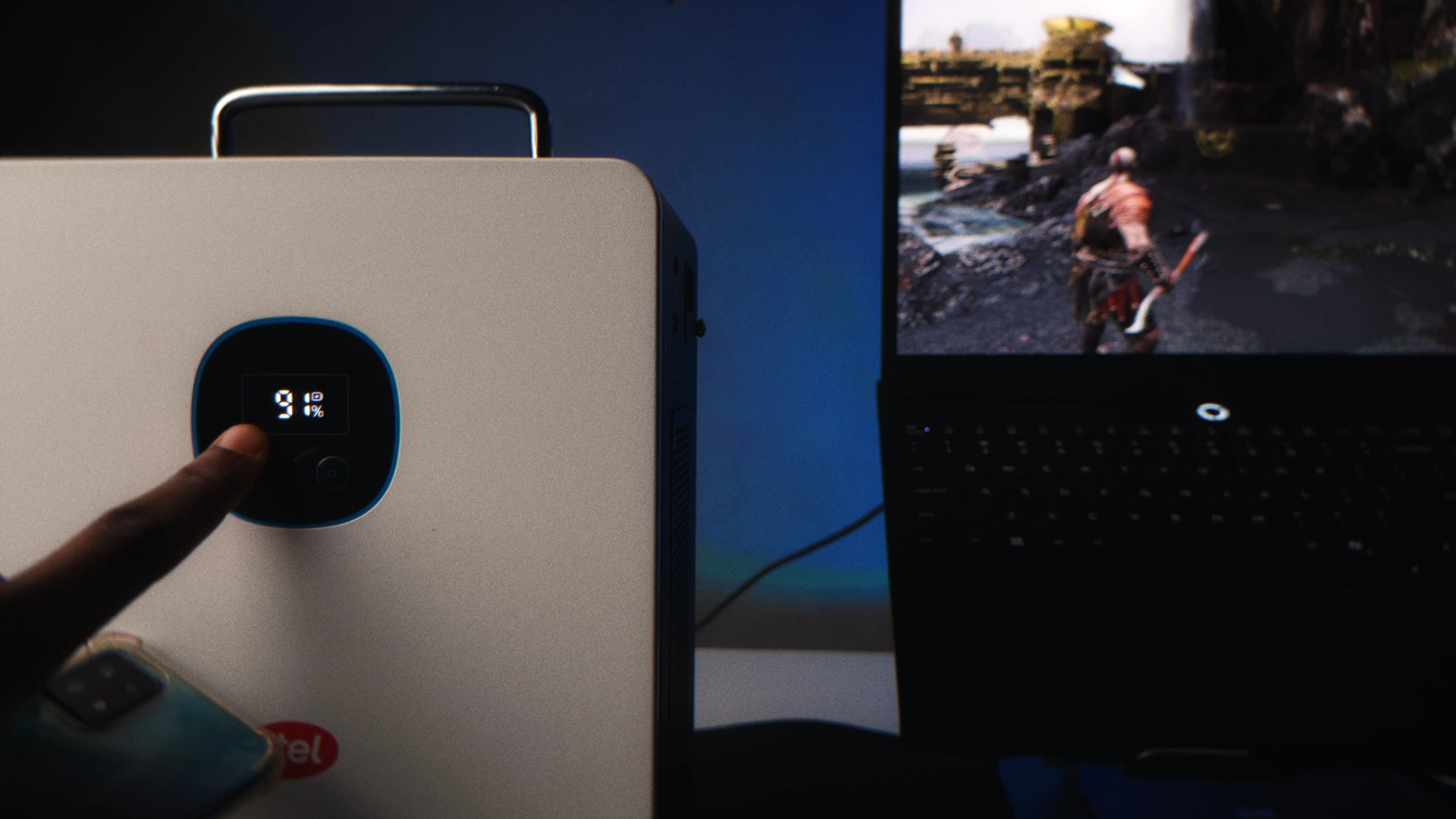 Close-up of the PowerTank display showing 91 percent after the one-hour test
The 500W Limit Matters More Than You Think
There is one number you absolutely cannot ignore: 500 watts.
A 1,000Wh battery sounds enormous until you connect something the inverter was never designed to run. I wouldn't start plugging an electric kettle, hot plate, iron or large microwave into this. Those kinds of heating and high power appliances can demand considerably more than the PowerTank's rated output.
For the devices I actually want this for, such as a laptop, router, fan, maybe a television and a few lights, that's where the PowerTank makes much more sense.
Before buying one, add up the power requirements of the devices you actually intend to run. The large battery does not remove the 500W output ceiling.
What It Feels Like During a Blackout
There is also something difficult to communicate through specifications: convenience.
With a generator, there's a whole process. Power goes out, you notice, you go outside, start it, deal with fuel, deal with noise, maintain it and eventually turn it off again.
With something like the PowerTank, you can keep the unit charged and simply have power sitting there waiting when you need it.
That becomes much more valuable if the thing you're protecting isn't just entertainment. Maybe you work remotely, maybe you run a small shop, or maybe your router going off literally means you stop making money.
At that point, uninterrupted power has an actual financial value.
That's also how I think you should judge the price. Is several hundred thousand naira expensive? Obviously. But the better question is: what is unreliable power already costing you?
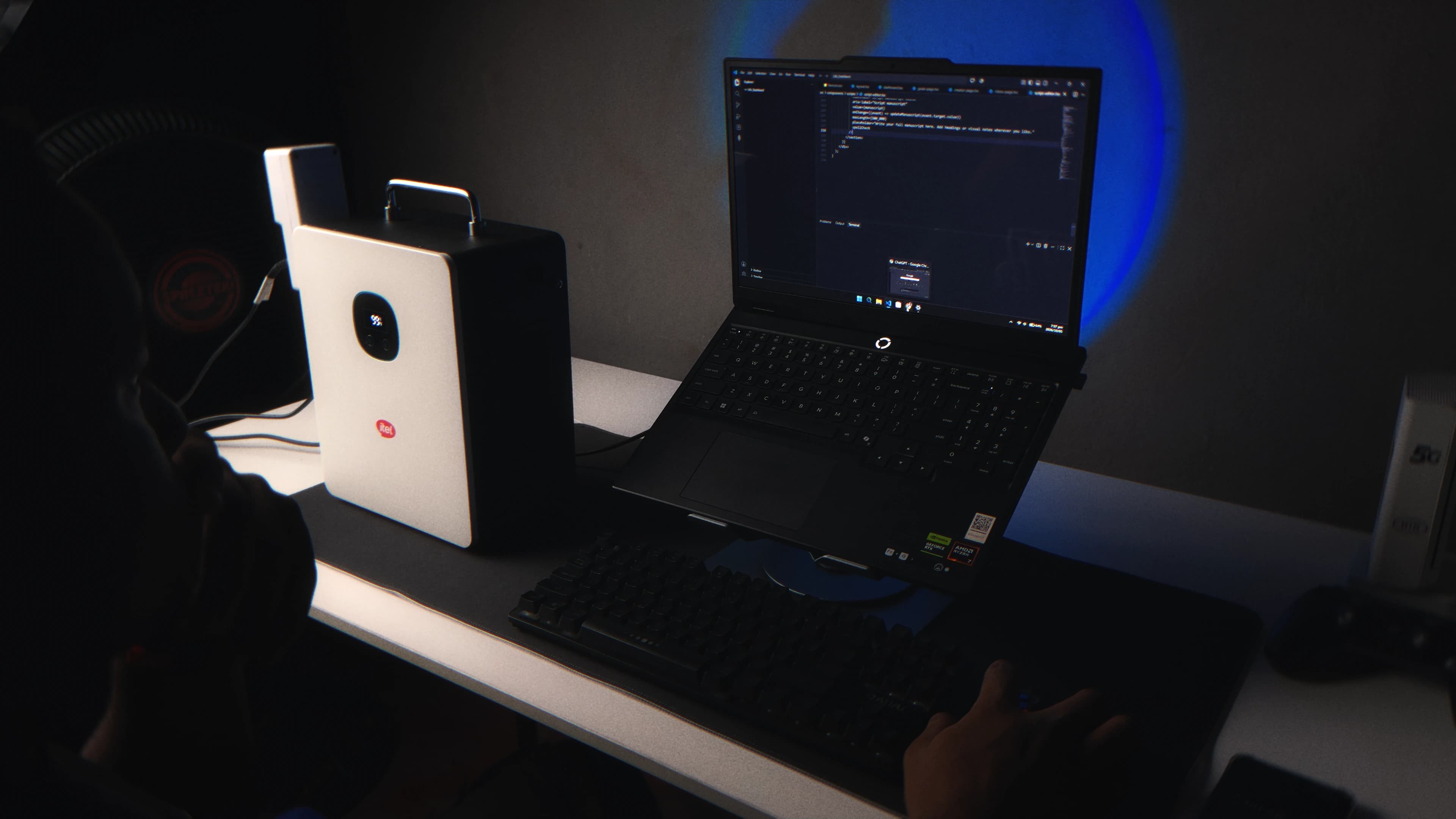 PowerTank running a work setup while the room's normal power is off
Things I Don't Like
The PowerTank definitely isn't perfect.
My biggest annoyance is still the display. I would like much more detailed real time information about what the system is doing, including power in, power out and an estimated runtime at the current load.
Once you've used a power station that can tell you something like "your current devices are using X watts and you have approximately Y hours remaining," it becomes difficult to go backwards.
The second issue is the 500W ceiling. For my work setup, that's fine, but it limits how ambitious you can get. If your goal is powering multiple heavy appliances during an outage, this isn't the class of product I would be looking at.
And finally, you need to think about charging. A large battery is only useful if you have a reliable way of putting energy back into it.
The PowerTank supports AC and solar charging, which makes solar particularly interesting if unreliable grid power is the exact reason you're buying it. But once you start adding panels, the total cost of your setup obviously rises as well.
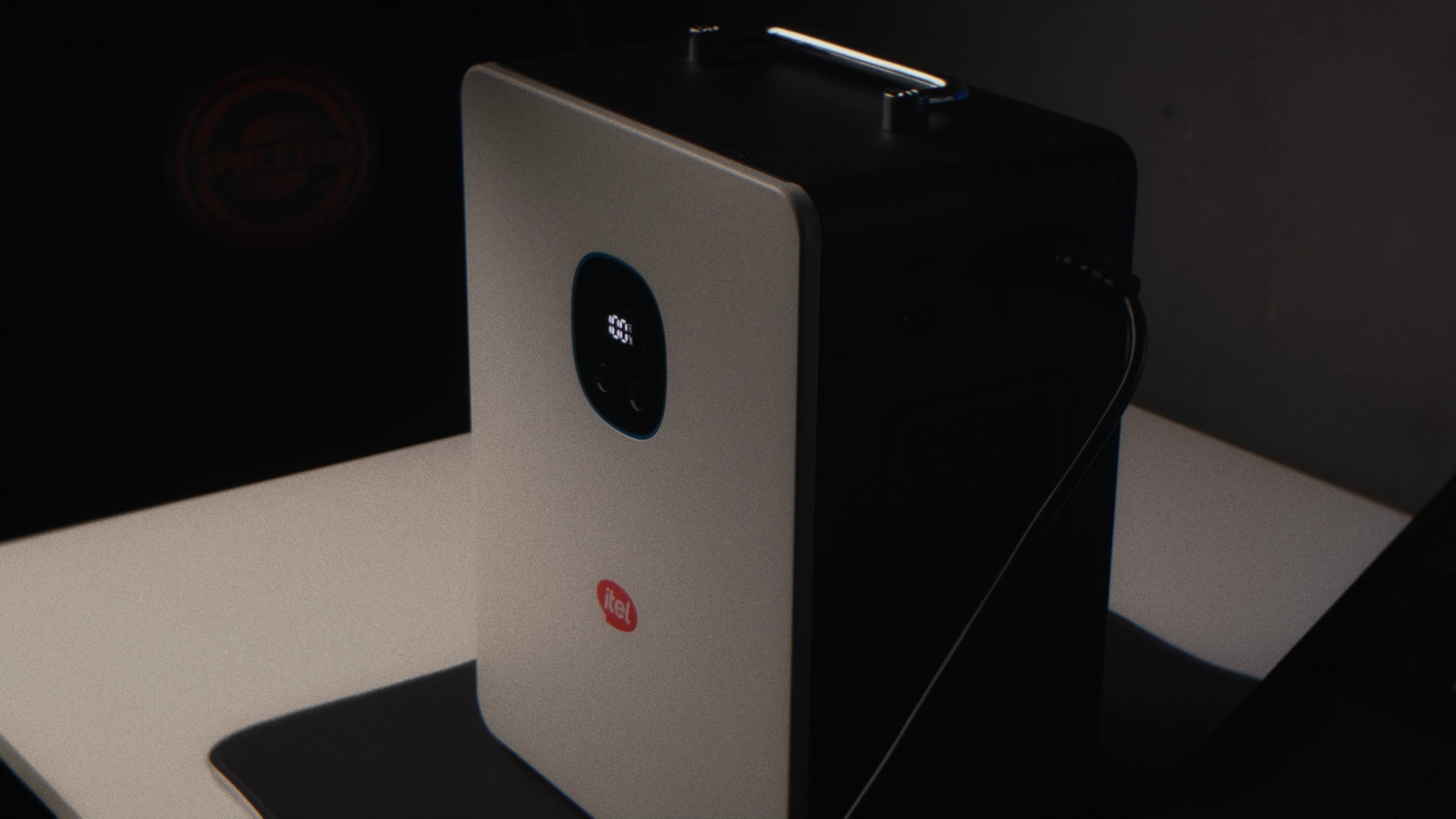 itel PowerTank connected to its charging input
Is It Worth the Money?
I think the answer splits into two groups.
If you're buying this because "big battery, cool," I probably wouldn't. It's a lot of money for something you might barely use.
But if you're constantly dealing with blackouts, work from home, need your router alive, need your laptop running or simply want quiet backup power for a few essential devices, it becomes much easier to justify.
Because what you're really buying isn't a battery. You're buying time.
Time before your laptop dies, time before you have to stop working, time without generator noise and time where a power cut doesn't immediately become your problem.
After actually using it, that's the part I understand now.
Verdict
So, does the itel PowerTank solve the problem I started with?
For my setup, yes.
My laptop and fan ran for an hour and the indicated battery dropped from 100% to 91%. That gives me significantly more confidence than any runtime claim written on a product page.
But I wouldn't recommend buying one without first doing one thing: work out what you're actually trying to power.
The 1,000Wh battery is impressive, but the 500W output is the number you need to pay attention to. If your devices comfortably fit inside that limit, something like this can be an incredibly convenient backup. If they don't, you need a bigger system.
And I think that's the real story here. This isn't a generator replacement for your entire house. It's more like a giant insurance policy for the few devices you absolutely cannot afford to have switch off.
Considering how easily a blackout can completely destroy a productive day, I understand the appeal.