
Hardware Review
13 min readIs the iPhone 15 Pro Still Worth Buying in 2026?
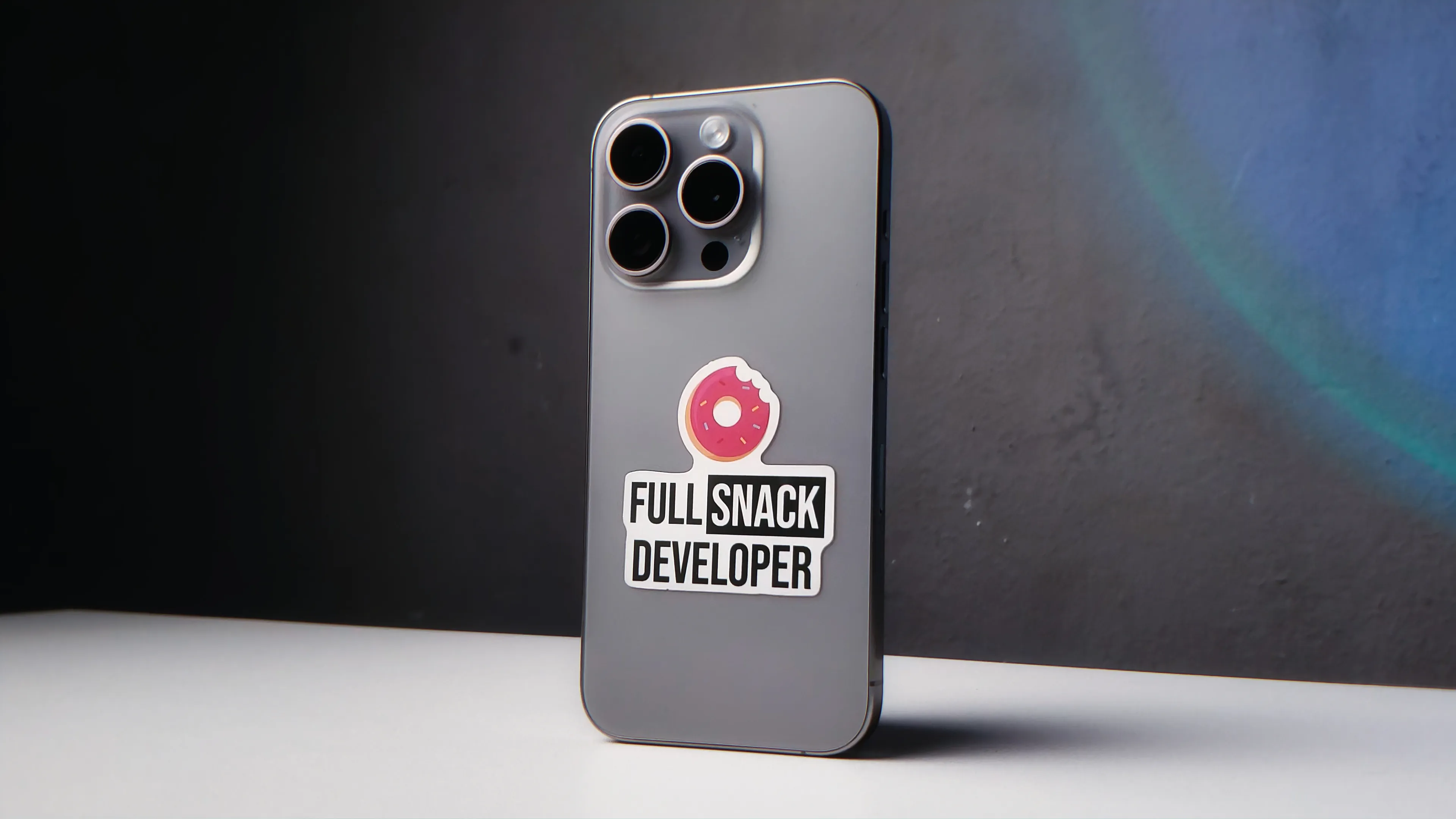
Three years after launch, the iPhone 15 Pro has become a tempting used phone purchase. Its hardware has aged well, but battery health, repair history and today's asking price determine whether it's actually worth buying.

Tech Creator /
When the iPhone 15 Pro launched in 2023, it was one of Apple's best compact flagship phones. It introduced a titanium frame, USB-C, the Action Button and the A17 Pro, all packed into a relatively small 6.1-inch body. At $999 for the base model in the US, it was firmly positioned as a premium flagship.
Three years later, the phone itself hasn't changed, but the market around it has. There are now three generations of newer iPhones, its cameras have been surpassed, and the battery in any unit that has been used since launch has had plenty of time to degrade. However, the asking price has also dropped considerably, and many of the features that made the 15 Pro expensive in 2023 are still genuinely useful today.
That's why I think the iPhone 15 Pro makes more sense in 2026 than it did when it launched. Not because the hardware has somehow improved, but because you're getting much of that original flagship experience for considerably less money. The important question is whether the particular used unit you're considering is worth its price.
The Price Changes the Equation
When it launched, the base iPhone 15 Pro started at $999 in the US. At that price, you were paying for a brand new flagship competing with the best phones available at the time. Buying one today is a completely different proposition.
Here in Nigeria, I was seeing used iPhone 15 Pro listings around ₦700,000 to ₦850,000, depending on storage, physical condition and battery health. That's a substantial difference from its original launch price and puts it in a category where it competes with newer standard iPhones, newer midrange Android phones and other second-hand flagships.
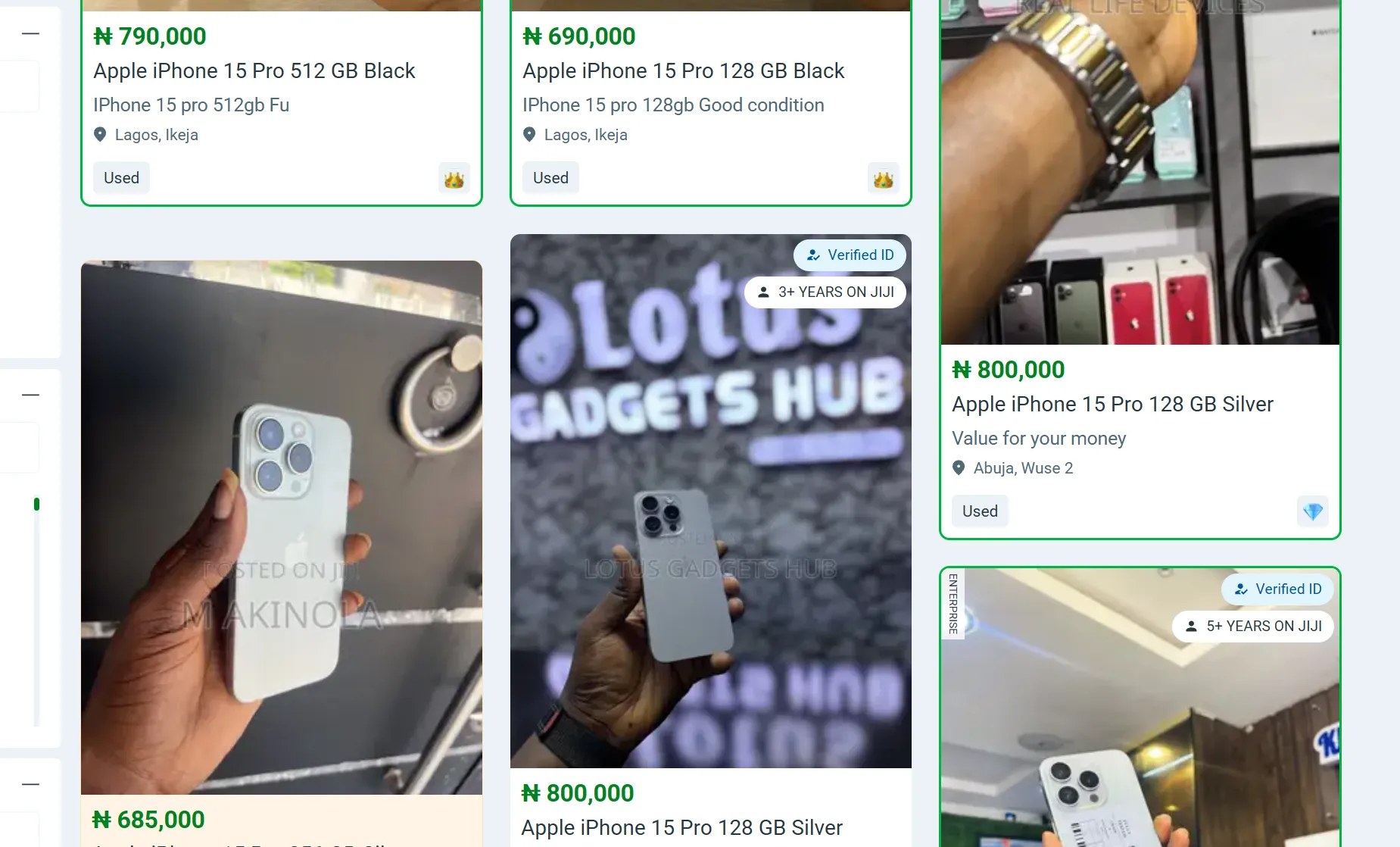 Used iPhone 15 Pro listings in Nigeria showing asking prices around ₦700,000 to ₦850,000
At this price, the 15 Pro becomes interesting because you're no longer paying for the privilege of owning Apple's latest flagship. You're buying into a previous generation that still has a lot of the hardware features people actually care about. A titanium build, a high-refresh-rate OLED display, a capable triple camera system, USB-C and a processor that still handles demanding applications comfortably are not insignificant things to get in a used phone.
Of course, the price alone doesn't make it a good deal. A newer Android might offer a larger battery, faster charging and a warranty, while another used iPhone might offer a better battery condition for a similar amount. The value of the 15 Pro depends on what you're getting in exchange for your money, but there's a good reason it remains worth considering.
The Hardware Has Aged Surprisingly Well
One of the first things I appreciate about the iPhone 15 Pro is that it doesn't immediately look like a three-year-old phone. The titanium frame, textured matte glass back, Dynamic Island and relatively thin bezels still give it a modern appearance. It's also a comfortable size for people who prefer a smaller phone without giving up the features of Apple's Pro lineup.
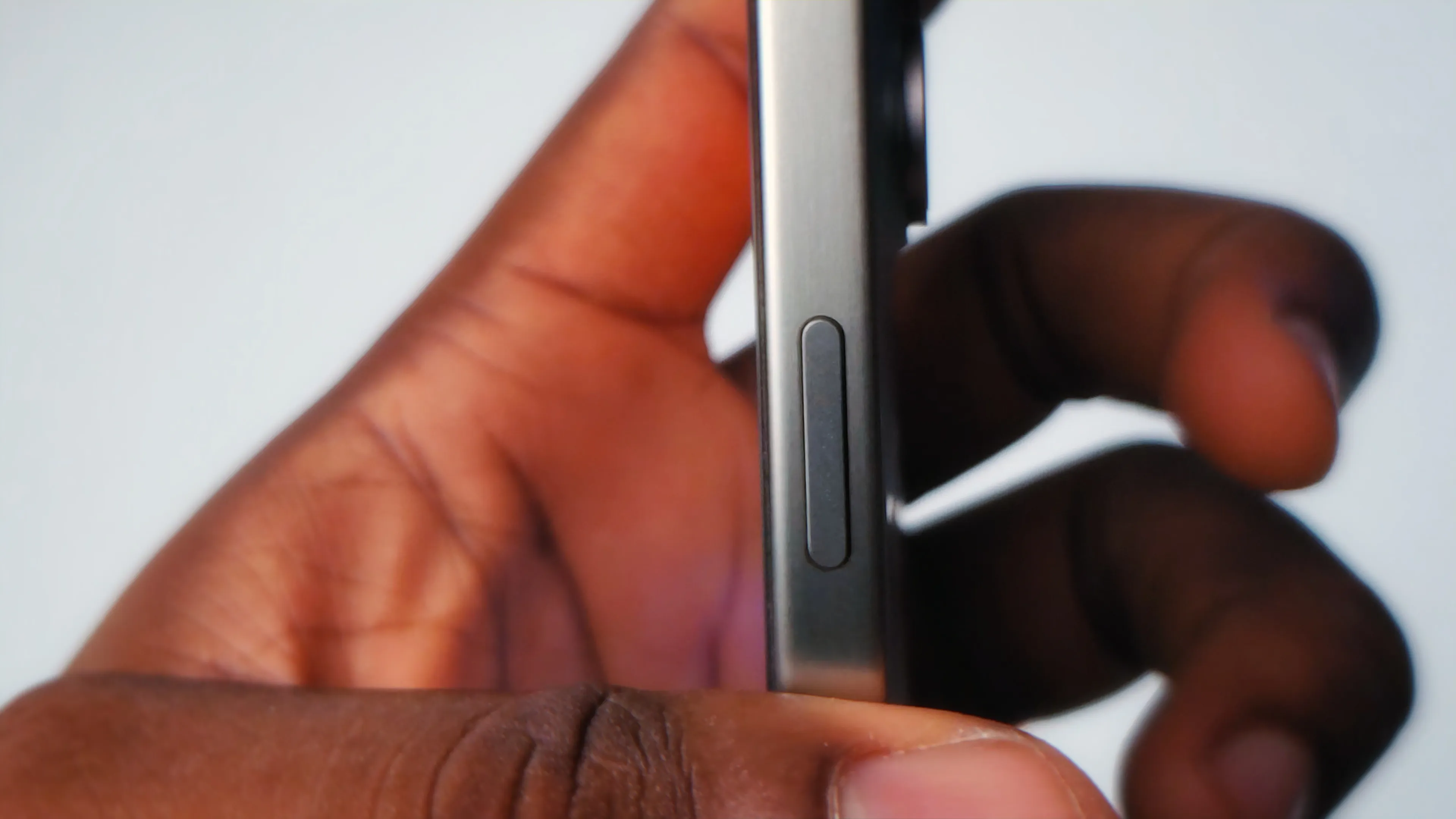 Close-up photograph of the iPhone 15 Pro titanium frame and matte glass finish
USB-C is another reason the phone has aged well, particularly if you're coming from an iPhone 14 Pro or an older Lightning model. You no longer need a separate cable just for your iPhone. The same USB-C cable you use with a laptop or other modern devices can handle charging and data transfer, and the port also makes connecting external storage considerably easier.
There's an important distinction here, though. The iPhone 15 Pro supports USB 3 transfer speeds of up to 10Gbps, but you'll need a compatible USB 3 cable to take advantage of those speeds. A regular charging cable won't necessarily deliver the same performance. For anyone who regularly moves large video files between devices, this is a genuinely useful upgrade rather than just a change of connector.
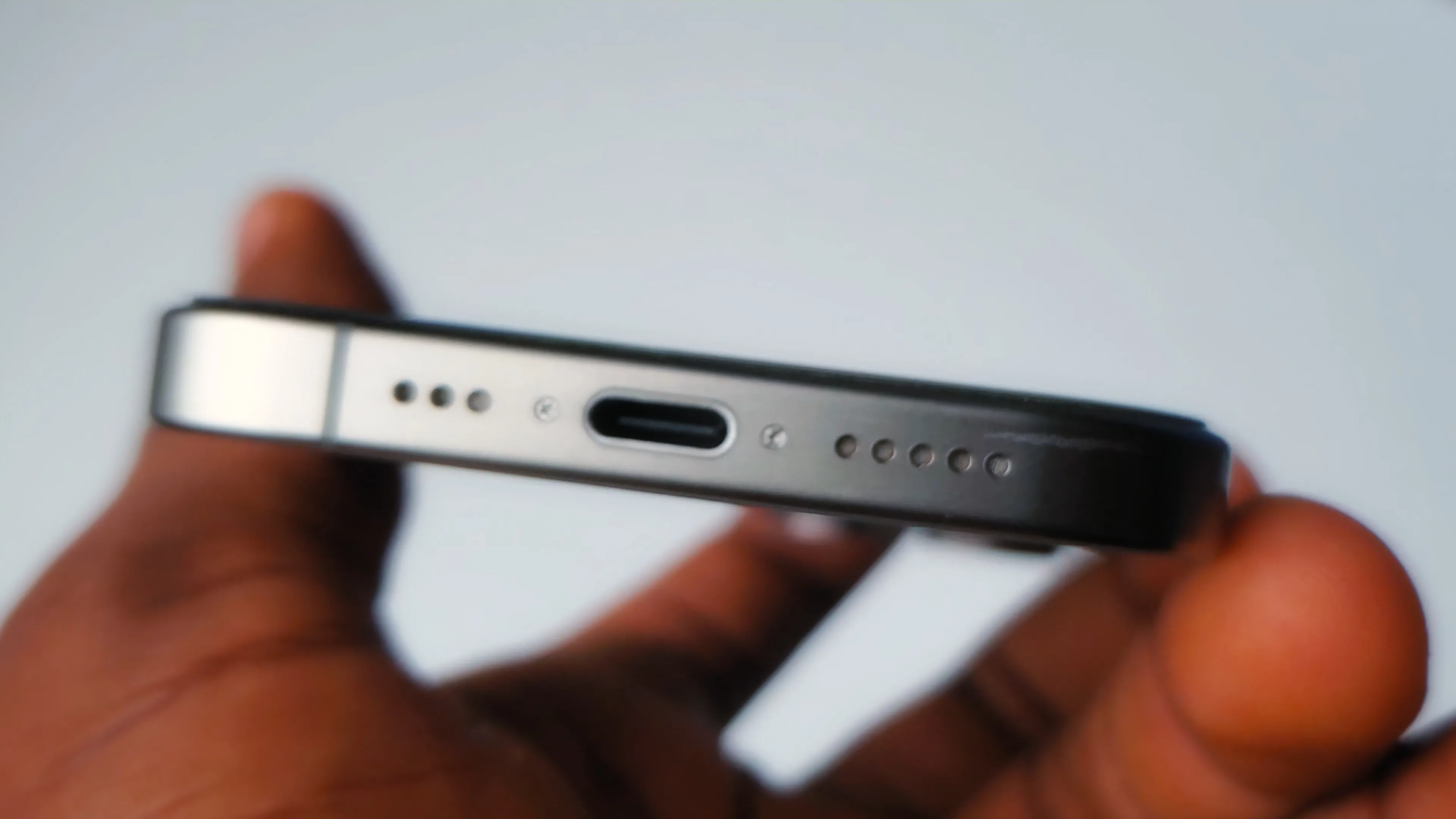 Close-up of the iPhone 15 Pro USB-C port and cable
The Action Button is another small addition that makes the phone more flexible. It replaces the traditional mute switch, but instead of being limited to switching between silent and ring modes, it can be configured to perform different actions. You can use it to open the camera, activate the flashlight, start a voice recording or trigger a custom Shortcut. It's not a feature that will change how everyone uses their phone, but once configured around something you regularly do, it becomes quite convenient.
The display is arguably just as important. The 15 Pro has a 6.1-inch Super Retina XDR OLED panel with ProMotion, supporting adaptive refresh rates of up to 120Hz. Scrolling feels smooth, colours look excellent, HDR content has plenty of impact, and the display still compares favourably with what you'd expect from a premium smartphone.
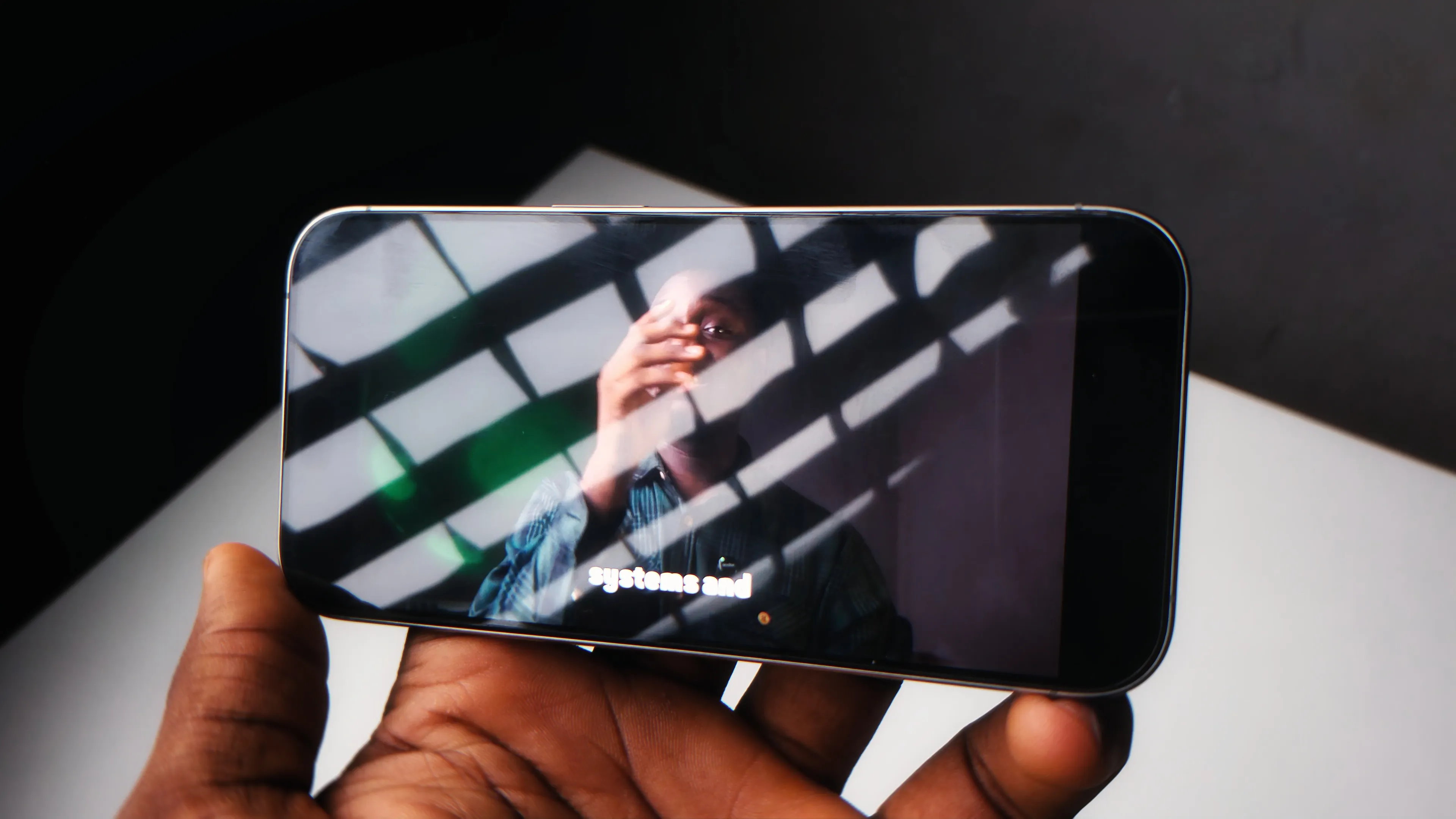 iPhone 15 Pro display showing HDR content
This is one of the advantages of buying an older Pro iPhone instead of automatically choosing a newer standard model. You're still getting Apple's higher-end display technology, rather than assuming that a newer release is necessarily better in every respect. Three years haven't made the 15 Pro's screen any less enjoyable to use.
The A17 Pro Still Has Plenty of Life Left
The iPhone 15 Pro runs on Apple's A17 Pro, and although there are newer processors available today, I wouldn't judge this phone by its position on a benchmark chart.
What matters more is how it performs in everyday use. Applications open quickly, system animations remain smooth, demanding games are still playable, and tasks like photo editing and video editing are comfortably within its capabilities. For the majority of everyday workloads, there's very little about the experience that makes the phone feel three years old.
That doesn't mean it's going to match the sustained performance or efficiency of Apple's newer processors. Technology moves forward, and newer chips have their own advantages. But unless you're buying the phone specifically for the most demanding mobile workloads, the A17 Pro is still a capable processor in 2026.
Interestingly, its importance goes beyond performance. There's another reason the A17 Pro makes the iPhone 15 Pro particularly relevant today, and it has more to do with software than raw processing power.
The iPhone 15 Pro Gained One of Its Biggest Features After Launch
When the iPhone 15 Pro launched, Apple Intelligence didn't exist. It was introduced later, and the 15 Pro ended up being the oldest generation of iPhone eligible for Apple's new AI features. The regular iPhone 15, despite launching alongside it, doesn't qualify.
That distinction has become even more interesting with the newer Siri AI beta available in iOS 27. Rather than simply responding to basic questions or setting reminders, Siri is gaining the ability to understand more personal context and help retrieve information based on what you actually remember about it.
For example, imagine trying to find a delivery message from Speedaf or a particular photograph from a computer setup you worked on. Instead of manually opening different applications and searching through everything, you can describe what you're looking for. Apple's published examples include finding a specific photo, an email buried in your inbox or a saved note.
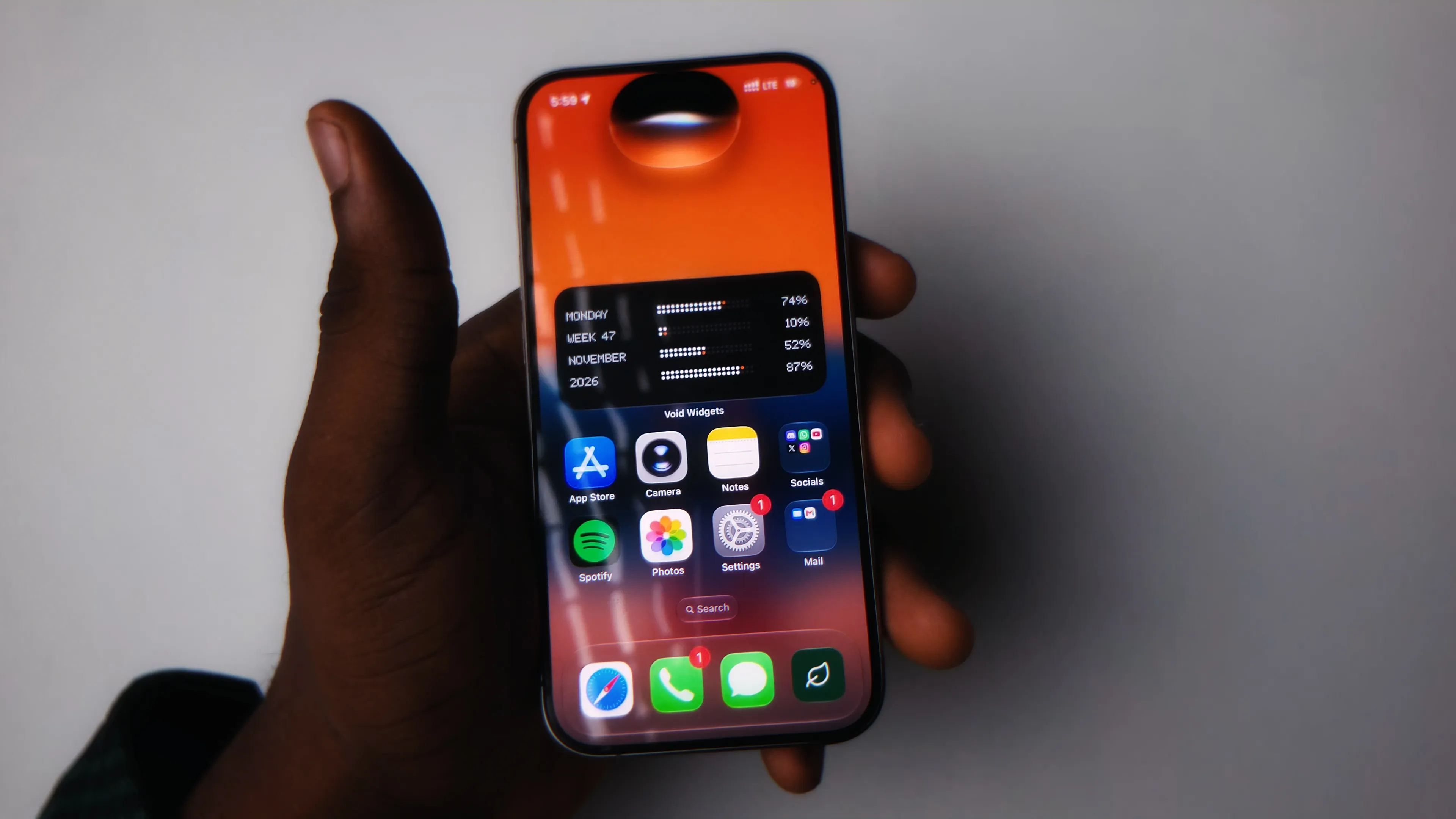 iPhone 15 Pro displaying the Siri AI beta interface
Apple has also been working towards making Siri more aware of what's on your screen and capable of taking actions across applications. These capabilities are part of a much broader attempt to make the assistant more useful in everyday situations.
It's worth remembering that Siri AI is still in beta, and availability depends on supported languages, regions and software versions. Not every announced capability should be treated as a finished feature. Nevertheless, the fact that a phone released in 2023 remains eligible for Apple's current AI platform is significant.
There are older iPhones that are still perfectly fast for everyday use but cannot access these features. The 15 Pro occupies an interesting middle ground: it's old enough to have become considerably cheaper, but recent enough to remain part of Apple's current software ecosystem.
The Cameras Are Still Capable, but Video Is Where Things Get Interesting
The iPhone 15 Pro has a 48MP main camera, a 12MP ultrawide and a 12MP 3x telephoto camera. That's a fairly versatile setup, especially for a phone with a 6.1-inch display.
The main camera produces detailed photographs with natural-looking colours, and having different focal lengths gives you more flexibility than a phone with just a primary sensor. Low-light photography is still good, although results naturally depend on the scene and the amount of available light.
The main limitation is the telephoto camera. The 15 Pro has 3x optical zoom, whereas the larger iPhone 15 Pro Max introduced a 5x telephoto lens. That makes the Pro Max more versatile when photographing subjects that are farther away. It's not a deal-breaker, but it's something worth knowing if zoom photography matters to you.
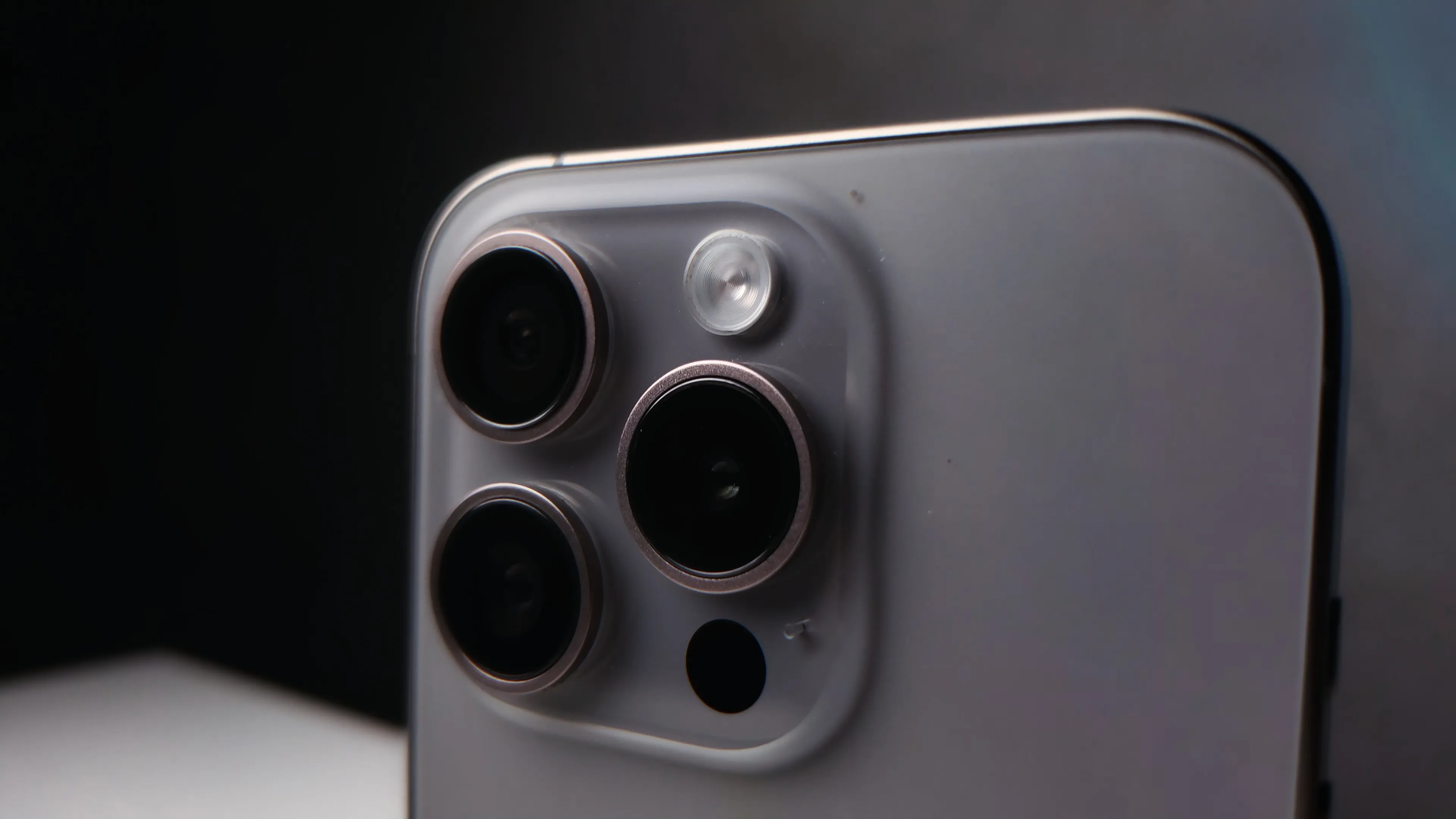 iPhone 15 Pro rear camera system showing the main, ultrawide and telephoto lenses
Video is where I think the 15 Pro becomes particularly interesting, especially for creators. It supports 4K recording at up to 60fps, Dolby Vision HDR, ProRes and Apple Log. More importantly, you can record ProRes footage externally through USB-C, with support for up to 4K60 when using external storage.
That last feature is particularly useful because ProRes files can consume a considerable amount of internal storage. Recording directly to an external SSD gives you more flexibility without having to worry about filling the phone's internal storage as quickly.
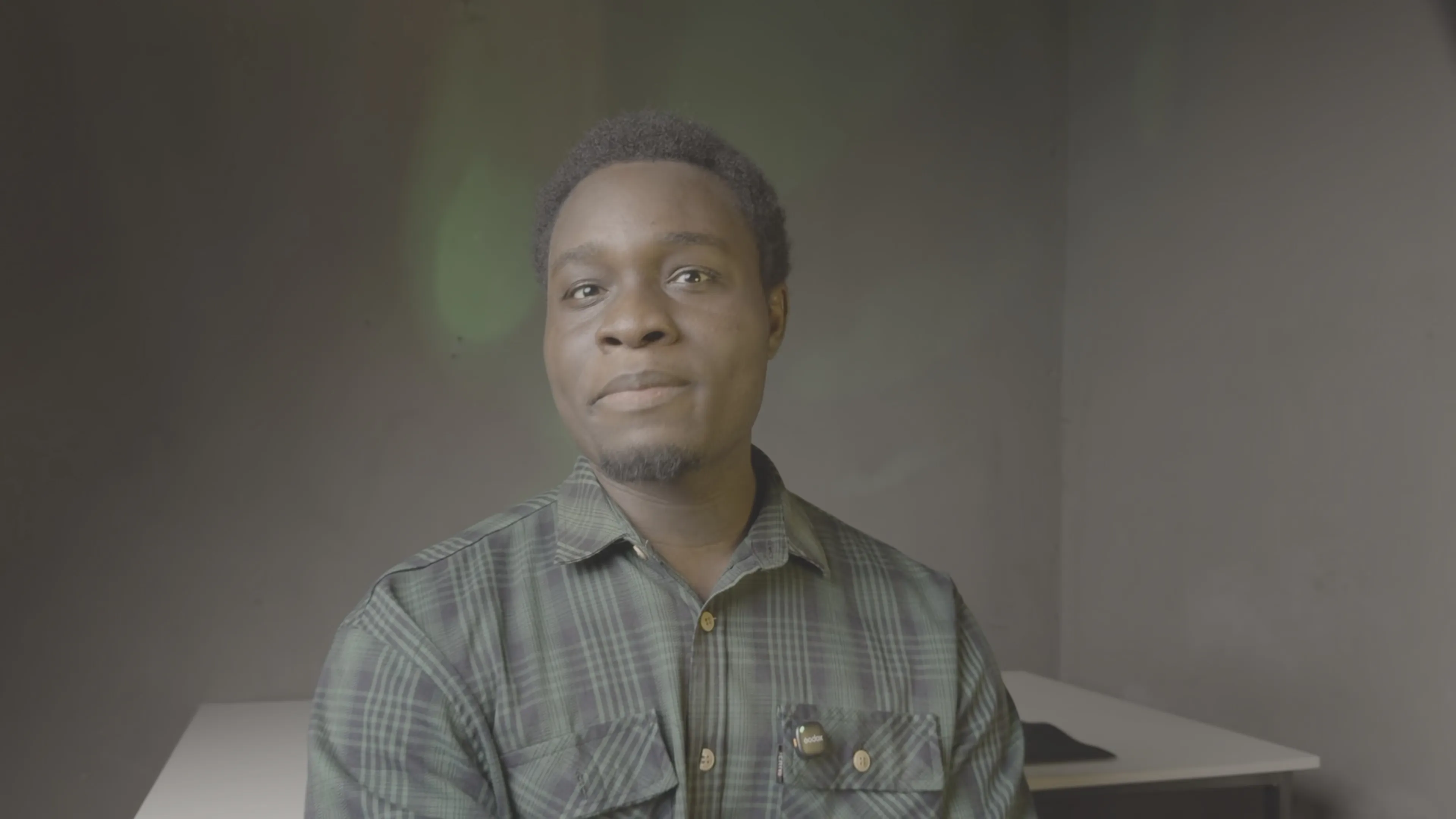 An ungraded Apple Log video frame recorded with the iPhone 15 Pro
 The same Apple Log footage after colour grading in DaVinci Resolve
Apple Log is another feature I wouldn't overlook. It gives you a flatter image with more flexibility for colour grading, allowing you to bring the footage into an editor like DaVinci Resolve and have considerably more control over the final look. It's not necessarily something every iPhone owner will use, but if you shoot video seriously, having these tools on a phone that now costs considerably less than it did at launch is a compelling proposition.
The camera system has certainly been surpassed by newer flagships, but that doesn't make its capabilities obsolete. For everyday photography and mobile video production, there's still a lot to work with here.
Battery Health Is the Biggest Question Mark
There is one area where the passage of time becomes much harder to ignore: battery life.
When the iPhone 15 Pro was new, battery health wasn't something you needed to worry about when buying it. In 2026, every used unit has its own usage history, and that history can make a noticeable difference to the experience.
A phone sitting at 92% maximum battery capacity and another sitting at 80% are not going to offer the same endurance. Both might look identical, have the same storage and run the same version of iOS, but their batteries have aged differently.
Apple originally rated the iPhone 15 Pro for up to 23 hours of video playback. That's a laboratory rating for a new device, not a guarantee of what you'll get from a used unit today. The phone also wasn't particularly known for exceptional battery endurance compared with some larger smartphones, so starting with a heavily degraded battery can make an already average experience worse.
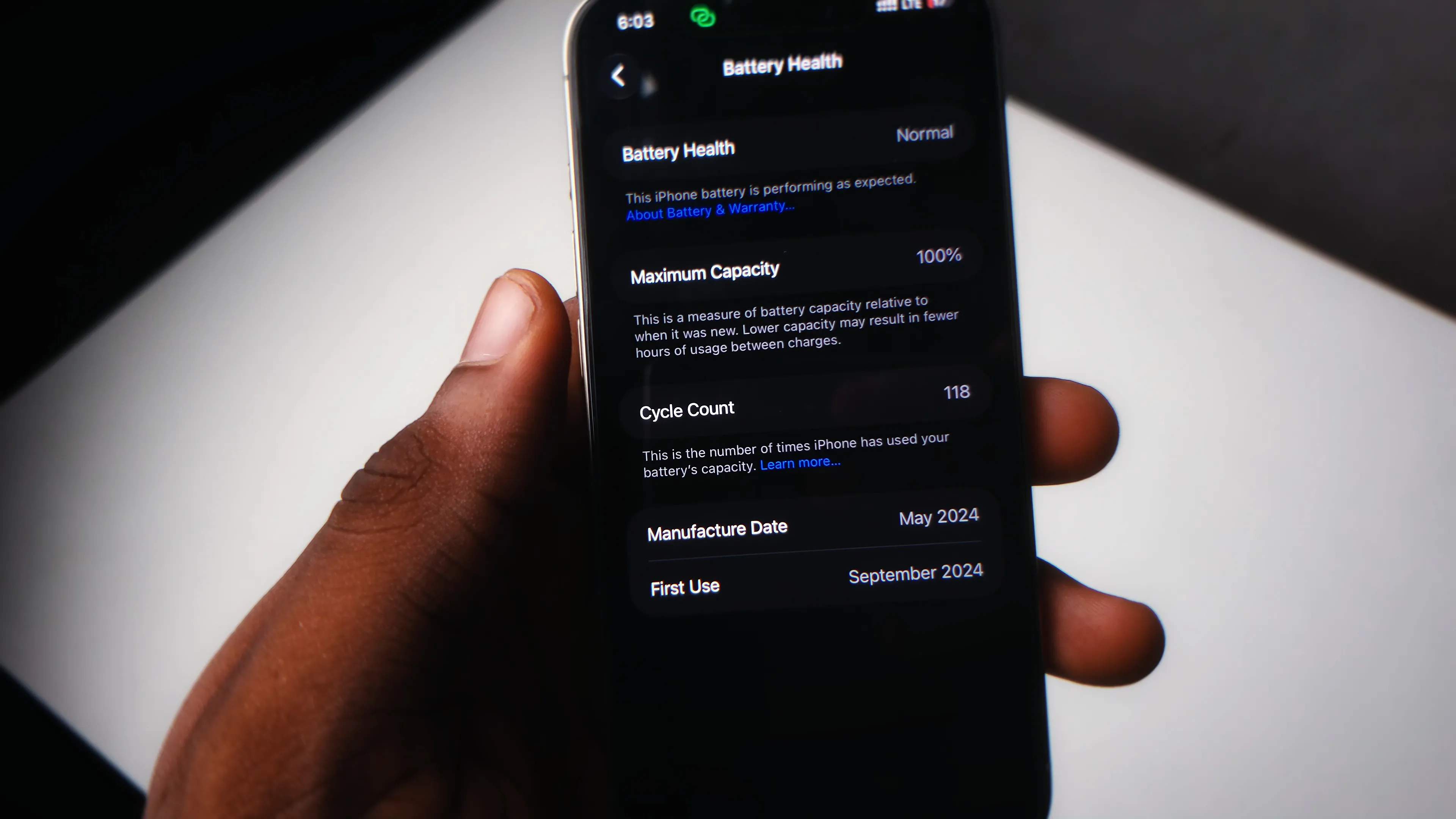 iPhone 15 Pro Battery Health screen showing maximum capacity and battery condition
This is why I'd pay close attention to battery health before negotiating a price. A cheaper unit with a worn battery might end up costing more once you factor in a replacement. I'd rather pay a little extra for a phone with a healthy battery and a convincing repair history than save money upfront and immediately have another expense to deal with.
Inspect the Actual Phone Before Paying
Battery health isn't the only thing to investigate. A used iPhone 15 Pro could have a replaced display, battery, camera or back glass, and the quality of those repairs can affect how the phone works. Face ID might not function correctly, the display could have problems with brightness or touch response, and a charging port that looks fine externally might have connectivity issues.
I'd start by checking Settings → General → About → Parts and Service History. Depending on the repairs performed, iOS can show whether certain components have been replaced and how they're identified. A Genuine Apple Part is different from an Unknown Part, which can indicate a non-genuine component, a previously used part or an installation issue.
You should also test the phone rather than trusting the seller's assurance that everything works. Check Face ID, photograph and record video with every rear camera, test the front camera, listen to the speakers, record something with the microphones, connect to Wi-Fi and mobile data, and make sure the USB-C port charges and transfers data. Inspect the screen for scratches, dead pixels and touch issues, and check the buttons and overall physical condition.
The IMEI is worth checking against the device information and using to investigate reported blacklist or network issues where reliable checks are available. However, an IMEI lookup is not proof that every component is genuine or that the phone is in good condition. It doesn't replace physically testing the device.
Most importantly, make sure the phone isn't Activation Locked. The seller should erase it and allow you to go through the initial setup process. If the device asks for the previous owner's Apple Account credentials, don't pay for it. The previous owner needs to remove that account before the phone can be transferred properly.
Apple has a useful guide to inspecting pre-owned iPhones that covers battery health, replacement parts, Activation Lock and other checks worth performing before buying.
The model name doesn't tell you the condition of the unit. Two iPhone 15 Pros can have completely different battery health, repair histories and reliability. Always inspect the actual phone you're paying for.
Who Should Consider Buying the iPhone 15 Pro?
I think the 15 Pro makes the most sense for someone upgrading from an older iPhone, particularly an iPhone 11, 12 or 13. The improvements are substantial enough to make the upgrade worthwhile: you get a 120Hz OLED display, a more capable camera system, USB-C, better video recording options, the A17 Pro and support for Apple Intelligence.
It's also a good option for someone who specifically wants a compact premium iPhone without paying the price of a much newer Pro model. The combination of its display, build quality, camera versatility and video features is still difficult to dismiss.
However, I wouldn't automatically recommend it over a brand-new Android or a newer standard iPhone. A new device might offer a better battery, faster charging, a warranty and the reassurance of buying something that hasn't spent three years in somebody else's hands. If those things matter more than the Pro camera system, display and video features, it could be the smarter purchase.
The important thing is to compare the actual devices available at your budget. Don't assume an older Pro iPhone is automatically better just because it used to be more expensive.
So, Is the iPhone 15 Pro Worth Buying in 2026?
I think the iPhone 15 Pro has aged remarkably well. Its performance is still good, the display remains excellent, the cameras are capable, and its video recording features are still genuinely useful. Continued software support, particularly its eligibility for Apple Intelligence and the newer Siri experience, also gives it an advantage over some older iPhones that remain perfectly usable but have missed out on these features.
At around ₦700,000 to ₦850,000, I can understand why someone would seriously consider buying one. You're getting a former flagship with a premium build and a feature set that still holds up against considerably newer phones.
But I'd never recommend buying one blindly. The battery health, repair history, storage capacity and overall condition matter just as much as the model name. A clean unit with a healthy battery and properly functioning components is something I'd seriously consider. One with a worn battery, questionable repairs and an unusually low asking price is a different story entirely.
Three years after launch, the question is no longer simply whether the iPhone 15 Pro was a good phone. It was. The real question is whether the particular iPhone 15 Pro in front of you is worth the money being asked for it.
And at this price, there's another comparison worth making: would you rather buy an older Pro iPhone or a brand-new Android?