
Tech History
7 min readHow Itel Built a Smartphone Empire the West Barely Knows About
How itel and its parent company Transsion built a massive phone business by focusing on markets and problems much of the global tech industry overlooked.

Tech Creator /
The Phone Brand Hidden in Plain Sight
Itel is a brand millions of people use every day, especially across Africa and other emerging markets, yet ask someone in the US or Europe about it and there's a good chance they've never heard the name.
That isn't really an accident.
While companies like Apple and Samsung fought over increasingly expensive smartphones, itel built its business much further down the market. Its focus was affordable phones for people who either couldn't justify spending hundreds of dollars on a device or were buying their first internet-connected phone.
The idea was basically to connect people technology had priced out.
And that strategy turned itel into one of the biggest phone brands most of the Western tech world barely talks about.
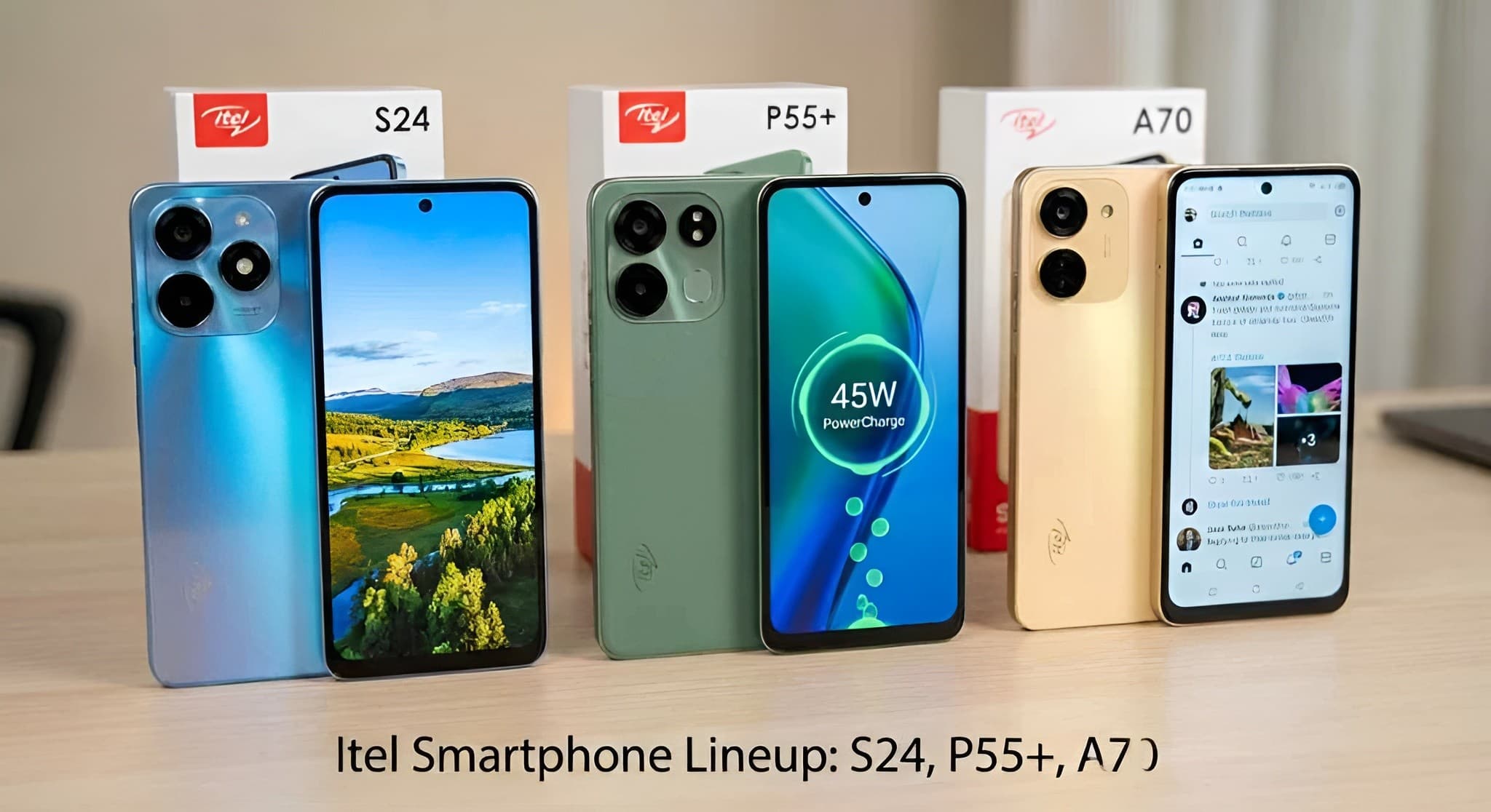 Modern Itel Smartphone Lineup
Where It All Started
The story really starts with Transsion Holdings, the Chinese company behind itel, TECNO and Infinix.
Transsion was founded in 2006 by George Zhu, who had previously worked in the overseas phone business and spent years travelling through markets outside China. Instead of joining the fight for China's already competitive phone market, Transsion increasingly focused on places like Africa where mobile adoption was growing quickly but affordability was still a massive problem.
Itel arrived in 2007 and became the group's brand focused most aggressively on the low end of the market.
That distinction matters because Transsion didn't try to make one phone brand appeal to everybody.
 Transsion Brand Family
TECNO gradually became the more mainstream brand, Infinix pushed harder toward younger buyers and performance-focused phones, while itel stayed closest to the entry-level market.
It meant Transsion could sell a cheap feature phone to one customer and a much more powerful smartphone to another without trying to stretch the same brand across every price point.
And eventually, that strategy became ridiculously successful.
Building Phones Around Actual Problems
One of the smartest things Transsion did was stop assuming everyone used a phone the same way.
Take SIM cards.
Using multiple networks has been common across African markets for years because coverage and call prices can vary massively between operators. Instead of expecting someone to carry multiple phones, Transsion was early to push dual-SIM devices and even produced phones capable of holding four SIM cards.
That sounds completely ridiculous until you understand the problem it was solving.
If calling someone on another network costs more, having multiple SIMs lets you switch networks instead of paying the extra charge. Add inconsistent coverage into the mix and suddenly four SIM slots don't sound quite as stupid.
Battery life was another obvious problem.
In places where reliable electricity isn't guaranteed, making a phone thinner isn't necessarily more useful than making it last longer. So long battery life became a huge selling point across Transsion's cheaper devices and especially its feature phones.
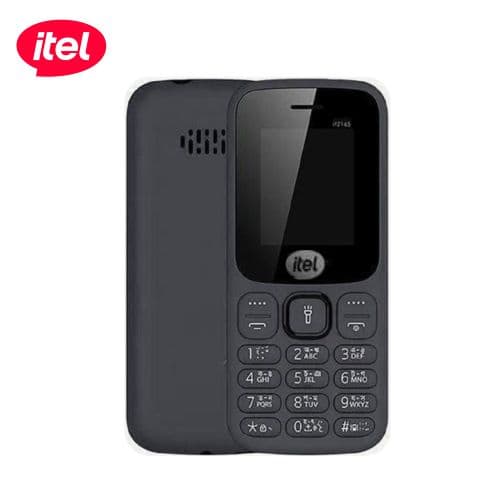 Classic Itel Feature Phone
This is what made Transsion different: features like multi-SIM support and huge batteries weren't added because they looked impressive on a spec sheet. They solved problems people in these markets were actually dealing with.
The marketing was just as local.
If you've spent enough time around Nigerian or Ghanaian phone shops, you've probably seen entire storefronts and walls covered in TECNO, Infinix or itel branding. Itel pushed this kind of street-level advertising heavily, particularly in areas where traditional online advertising wasn't necessarily the best way to reach buyers.
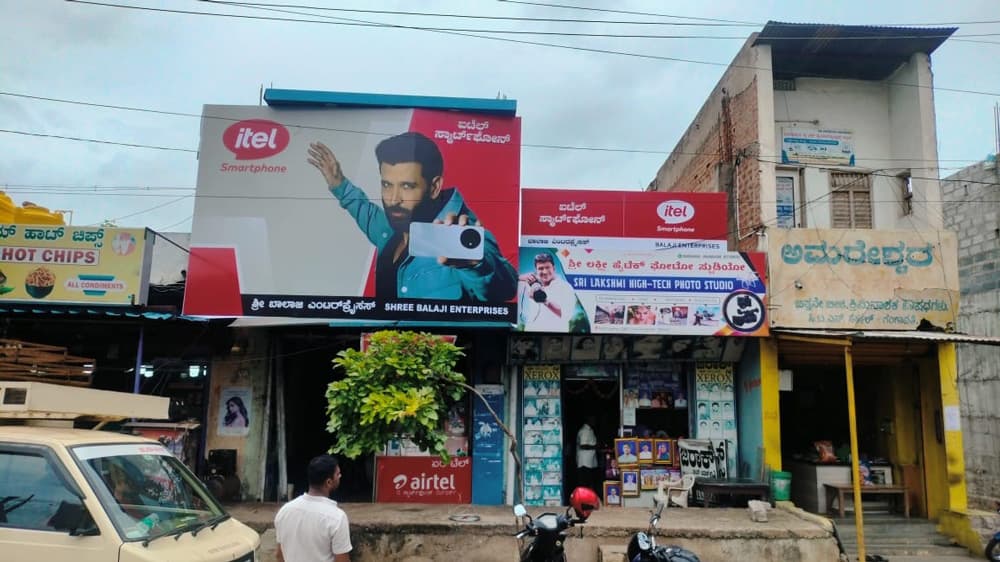 Itel Wall Painting Marketing
A 2021 study of phone distribution in Ghana described itel advertising as practically everywhere in some rural areas, with walls, shops and even houses carrying the brand's distinctive red marketing.
That physical visibility mattered.
Itel wasn't just sitting on a website waiting for somebody to discover it. The brand was sitting inside the exact markets where people were buying their phones.
By 2017, itel said it had reached 80 million handset sales, which gives you some idea of just how enormous the supposedly obscure brand had become.
Cheap Phones Eventually Became a Harder Sell
The problem with building your reputation around being cheap is that eventually everybody else's cheap phones get better too.
For years, the compromises on an itel phone were pretty easy to understand. You paid very little money, so you accepted a slower processor, less RAM, a basic camera and simpler materials.
But consumer expectations changed.
People buying inexpensive phones started expecting smoother displays, more storage, better cameras, USB-C, faster charging and eventually 4G and 5G without spending dramatically more money.
At the same time, brands like Samsung, Xiaomi, realme and others became much more aggressive at the bottom of the market.
That squeezed itel from both directions: customers wanted more, while competitors were getting better at delivering it cheaply.
There were also bigger problems around Transsion during this period.
In 2020, security company Upstream reported finding Triada and xHelper malware components on some TECNO W2 phones. The investigation involved a TECNO model rather than an itel phone, so I wouldn't pin the scandal directly on itel, but TECNO and itel share the same parent company and it raised uncomfortable questions about quality control inside the wider Transsion ecosystem.
For itel itself, the more persistent problem was simpler: being extremely cheap wasn't enough anymore.
Competition Changed Everything
You can actually see that pressure in the market.
Transsion as a whole is still massive across the Middle East and Africa, but itel hasn't had everything its own way. Counterpoint reported that in early 2025 the brand was struggling across several price bands while remaining extremely strong in the $50–$74 smartphone segment.
That's basically the problem in one statistic.
Itel is still very good at being cheap. The harder question is how far upward the brand can move without losing the thing that made people buy it in the first place.
By 2023, itel clearly wanted to change how people saw the company.
It introduced a completely redesigned logo and started talking about itself less like a feature-phone company and more like a broader "smart life" brand covering phones, tablets, accessories, TVs and other electronics.
And the phones started looking different too.
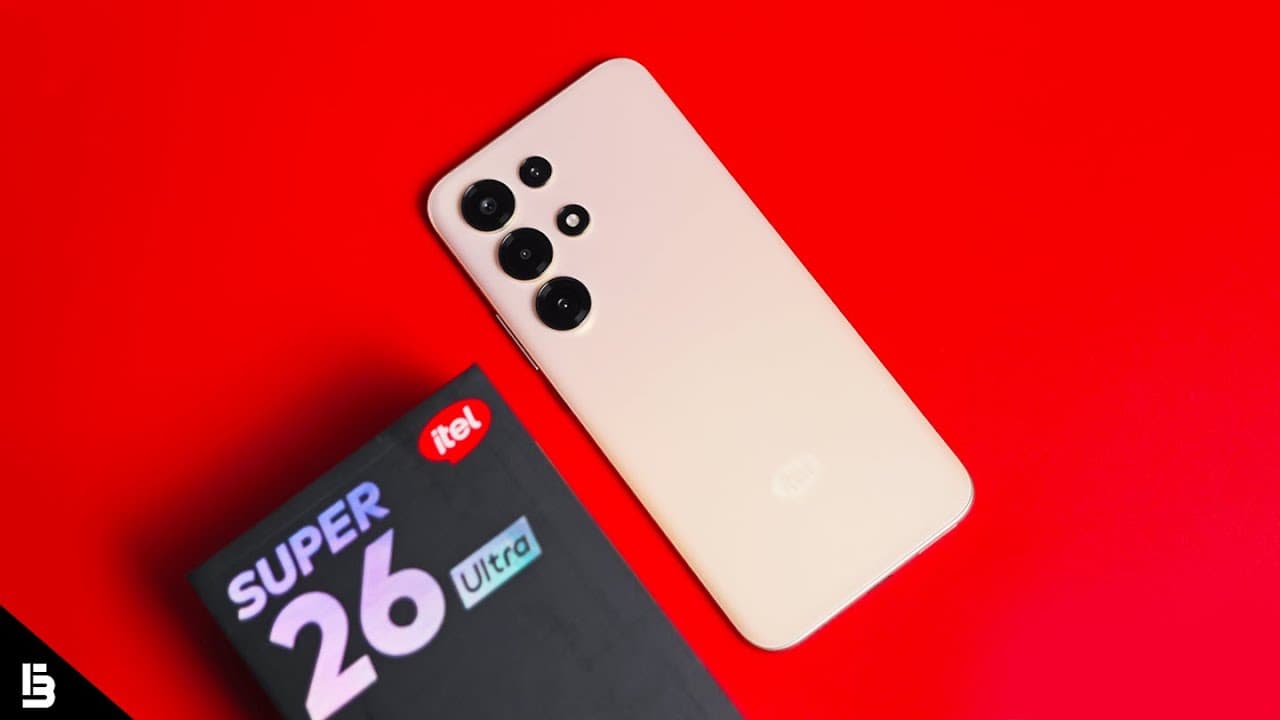 Modern Itel Smartphone Design
The SUPER 26 Ultra is probably the funniest example of how far things have moved. We're talking about an itel phone with a curved 1.5K AMOLED display running at 144Hz, 256GB configurations and a design that is clearly trying to look far more expensive than what people traditionally associate with the brand.
That would have sounded absurd a few years ago.
Then there is the Power 70, which feels much closer to classic itel philosophy. It has a 6,000mAh internal battery and can pair with a 4,000mAh charging case, giving you a combined 10,000mAh power setup.
That's the interesting thing about modern itel: the company is trying to make its phones look and feel more premium without abandoning the practical stuff that made the brand successful in the first place.
Carlcare Might Be Transsion's Biggest Advantage
One part of Transsion's strategy doesn't get talked about enough: Carlcare.
Carlcare is the company's official after-sales service network for itel, TECNO, Infinix and several of its other brands.
That matters a lot more than it sounds.
You can sell the cheapest phone in the world, but if the screen breaks and the customer can't find a replacement part or anyone who knows how to repair it, that cheap phone suddenly becomes disposable.
Transsion built repair and support infrastructure alongside its phone business. The company says Carlcare now has more than 2,000 service contact points, including partner locations, across its markets.
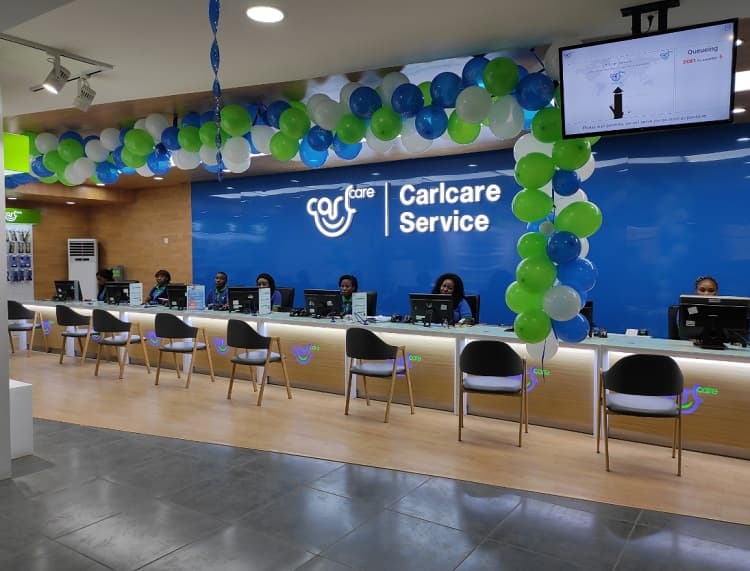 Carlcare Service Center
In Nigeria alone, you can find official Carlcare locations across multiple major cities.
That gives Transsion something a random ultra-cheap phone imported from somewhere else simply doesn't have: a place to take it when something goes wrong.
And when you're selling to people who may have spent a significant chunk of their income buying that phone, repairability and local support matter.
Why Itel Survived
I think that's the part of itel's story I find most interesting.
The company didn't become successful because it made the fastest phone, had the best camera or invented some revolutionary piece of technology.
It became successful because Transsion paid attention to people much of the global tech industry wasn't designing around.
Multiple SIM cards because switching networks saved money. Huge batteries because electricity wasn't always reliable. Cheap feature phones because even a $200 smartphone could represent an enormous expense. Local shops, local marketing and actual repair centres instead of expecting everything to happen online.
It sounds obvious now.
Apparently it wasn't.
And even though itel now wants to move into better-looking and more capable hardware, affordability is still the thing holding the whole identity together.
That's what makes the next part interesting.
Because getting people to trust you as the cheap phone brand is one thing.
Convincing those same people that you're now capable of making something premium is a completely different problem.